$ / Per Person
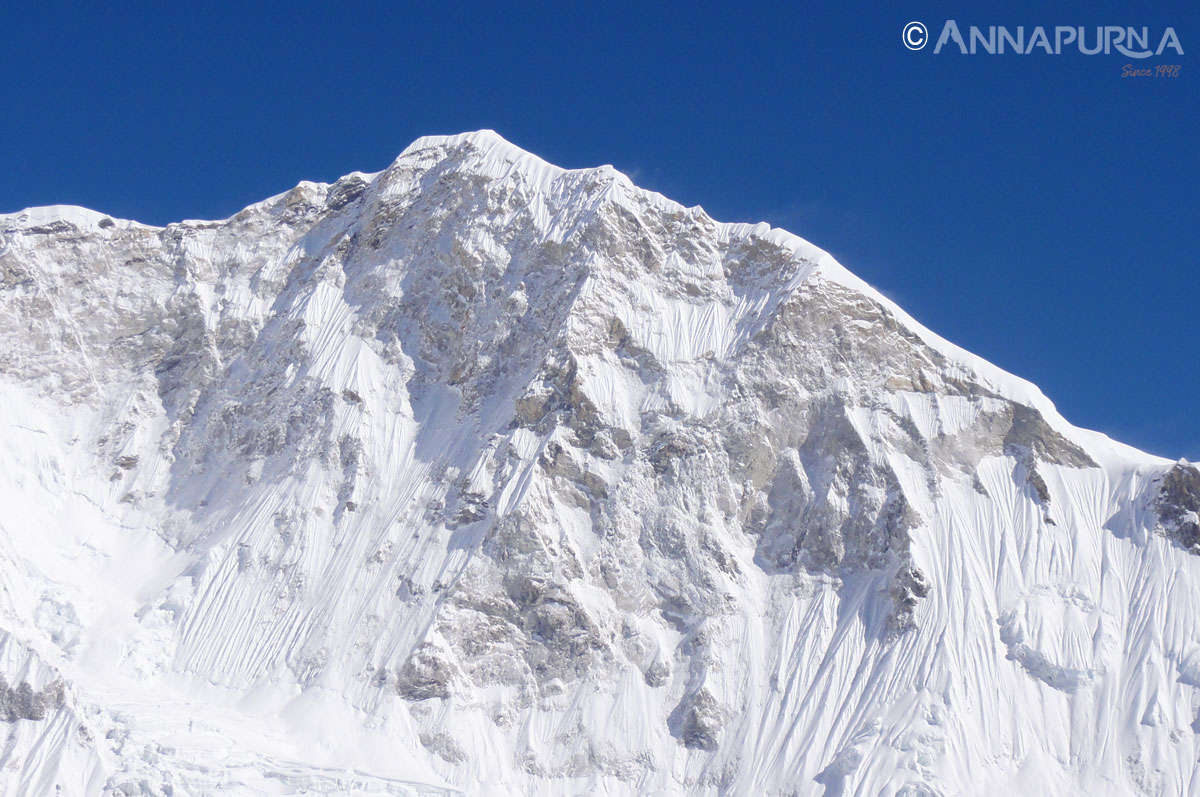
Baruntse (7,129 m) is a striking, four-peaked mountain in the Khumbu region, flanked by the glaciers of Everest, Lhotse, and Makalu. Most Himalaya experienced alpinists describe Baruntse as the “perfect Himalayan 7-thousander” for its symmetry and technical beauty. Mount Baruntse climbing offers a challenging but rewarding climb for even experienced mountaineers. The expedition route is beautifully and challengingly a full circuit, beginning with a remote trek, followed by a methodical climb, and concluding with a dramatic exit over the Amphu Lapcha Pass.
The Baruntse climbing itinerary offers an extraordinary climbing adventure in the heart of the Himalayas. It offers scenic trekking, gradual acclimatization, acclimatizing Peak climb on the way to Baruntse climbing, and cultural experience while accessing Baruntse and returning. Baruntse is an expedition suitable for climbers seeking more than a peak and preparing for the Everest Expedition or any other 8-thousander summit. Baruntse offers the opportunity to traverse mountainous valleys, cross theatrical high-altitude passes, and experience a real adventure in the extreme Himalayan Atmosphere.
Arrive in Kathmandu with a warm traditional welcome from a representative of Annapurna Treks & Expeditions, escorted to your hotel, complete check-in formalities, and rest. The second day is for a jet-lag-shaking guided tour, expedition briefings, and final preparation for your journey to the summit of Mount Baruntse. Kathmandu, the lively capital of Nepal, marks the starting point for the Baruntse Expedition. With its ancient temples, vibrant streets, and rich heritage, Kathmandu offers all kinds of travellers and adventurers a perfect starting and ending point. Both before and after the journey, the travellers experience a sense of spiritual gratitude as they visit the sacred sanctuaries.
During the high season, such as spring and autumn months, all flights to Lukla operate from Manthali Airport, located in a deep valley at an elevation of 474m and 134 kilometres east of Kathmandu, accessible by an early morning 4-hour drive. The drive from Kathmandu starts around 04 AM and reaches Manthali airport at 08:00 AM. From Manthali, it is just a 15-minute flight to Lukla! The airport operates only flights between Lukla and Manthali; therefore, flights are swift, and there is no need to wait hours as at Kathmandu airport, with the possibility of cancellation. Still, our agency secures all available direct early-morning flights from Kathmandu to Lukla for our guests.
The access route from Lukla to Baruntse Base Camp is an expedition in itself, a classic approach that takes you deep into the remote Hinku and Honku Valleys. The route from Lukla to Baruntse Base Camp traverses Hinku and Honku Valleys and crosses the Zatrwa La and Mera La before reaching the Baruntse Base Camp. The distance from Lukla to Baruntse Base Camp is over 10 days, including two high passes, rest days, and the Mera Peak summit, for proper acclimatization before reaching Baruntse.
The first-phase trail, from Lukla to Chhatrawa via Zatrwa La (4,600m), is challenging and involves a rapid altitude gain. The trek begins at Lukla Airport and enters the forest above Lukla, with a steep climb out of Lukla. To reach the Hinku Valley, you must cross the Zatrwa La pass, the high, frozen saddle north-east of Lukla. The trail from the Zatrawa then descends to Chhatrawa, also spelled Chatrabu or Chhatra Kharka, a common overnight stoppage serving as the gateway to the lower valley toward Hinku and Pangkongma. Chhatrawa was a Yak Shade for summer, currently filled with several lodges.
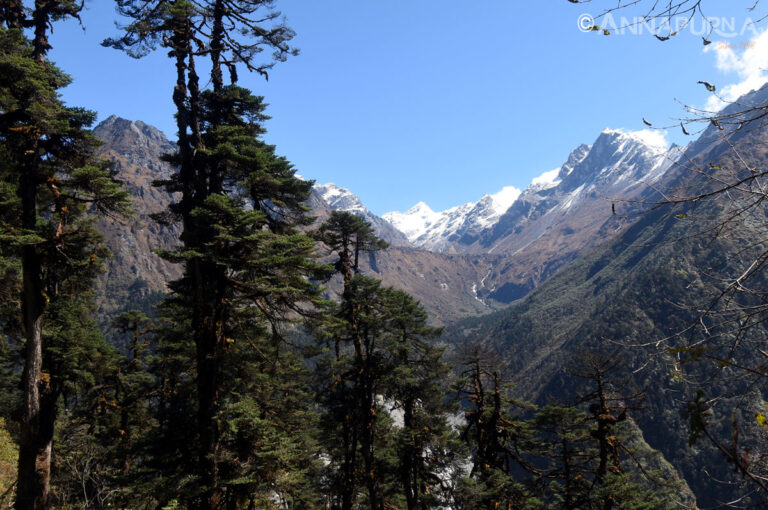
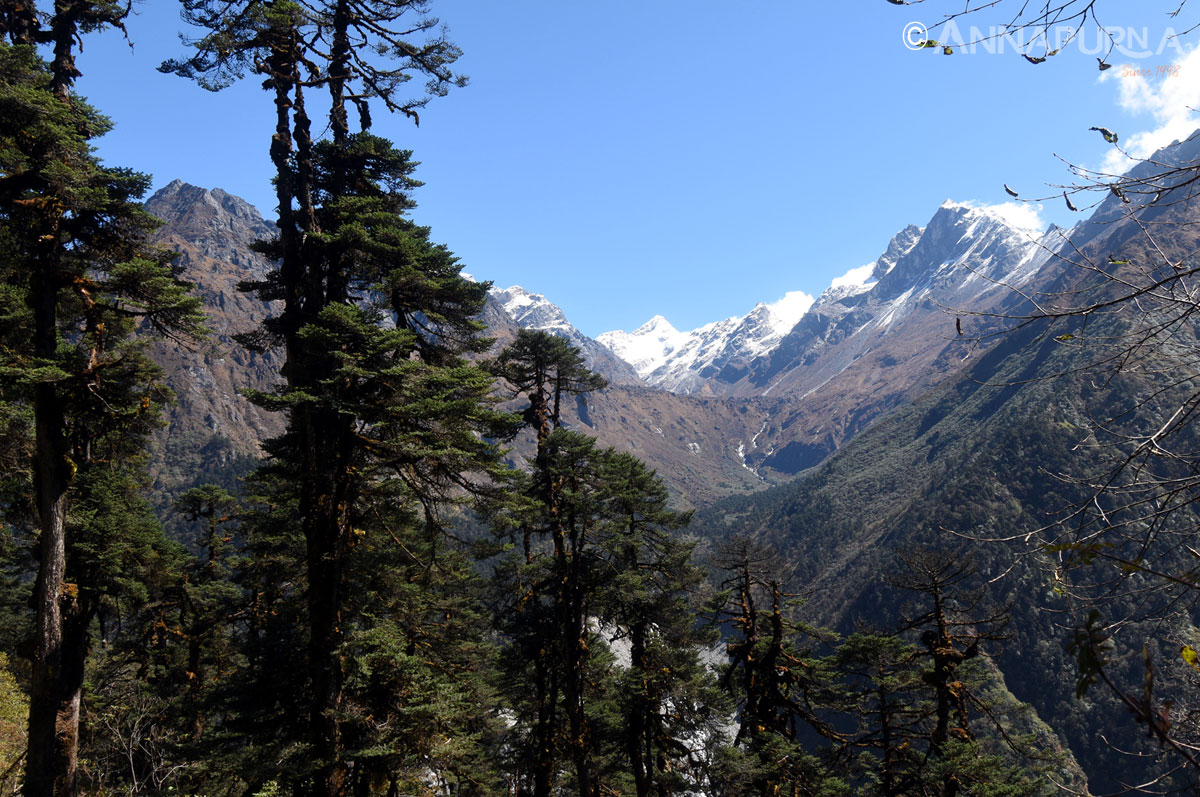
The trail from Chhatrawa descends to Thasing Dingma (Pine Meadow in Sherpa), once a very dense area with beautiful pine forests, destroyed by a flood triggered by the explosion of a glacial lake near Tagnag. The trail from Thasing Dinma follows the Hinku River north through a stunning, uninhabited alpine forest, with tiny side valleys, streams, and moraine landscape.
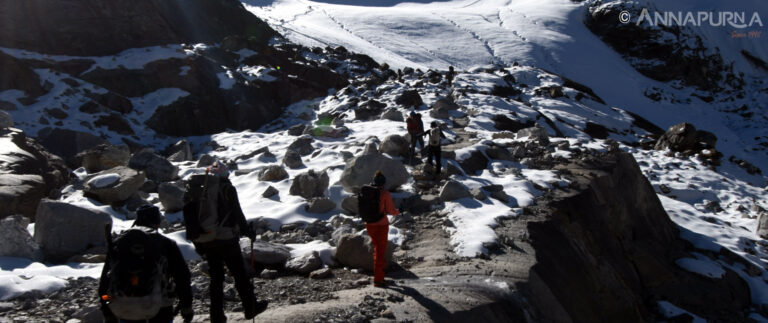
Before accessing Mera Peak, you will have two beautiful exploratory acclimatization days at Tagnag and Khare (5,000m), the last two settlements before accessing Mera La and entering the Honku Valley. From Khare, the route crosses the glacier to reach Mera La (5,415m), the highest point on the approach trek to Baruntse, but the pass and terrain are technically not difficult to cross. Reaching the pass and from Mera Base Camp rewards you with the first close-up views of Baruntse and its neighbor, Chamlang.
From Mera Base Camp, the trail ascends to Mera High Camp (5,780m), where breathtaking views of the giants of the Everest region begin to dominate the skyline.
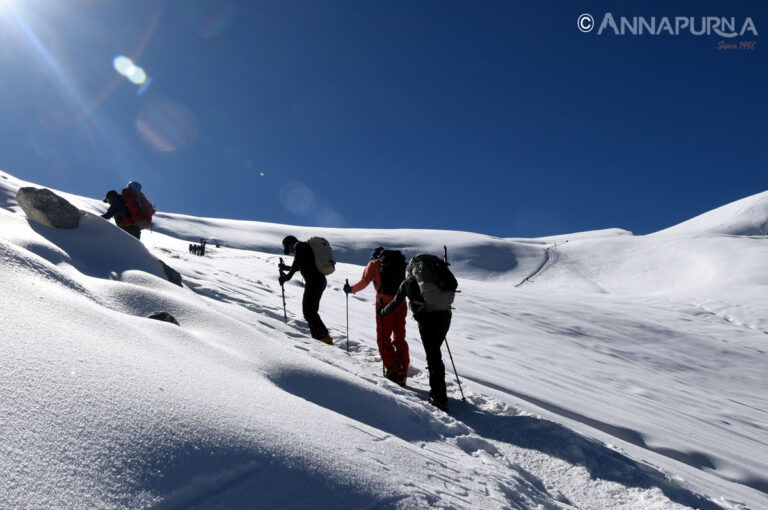
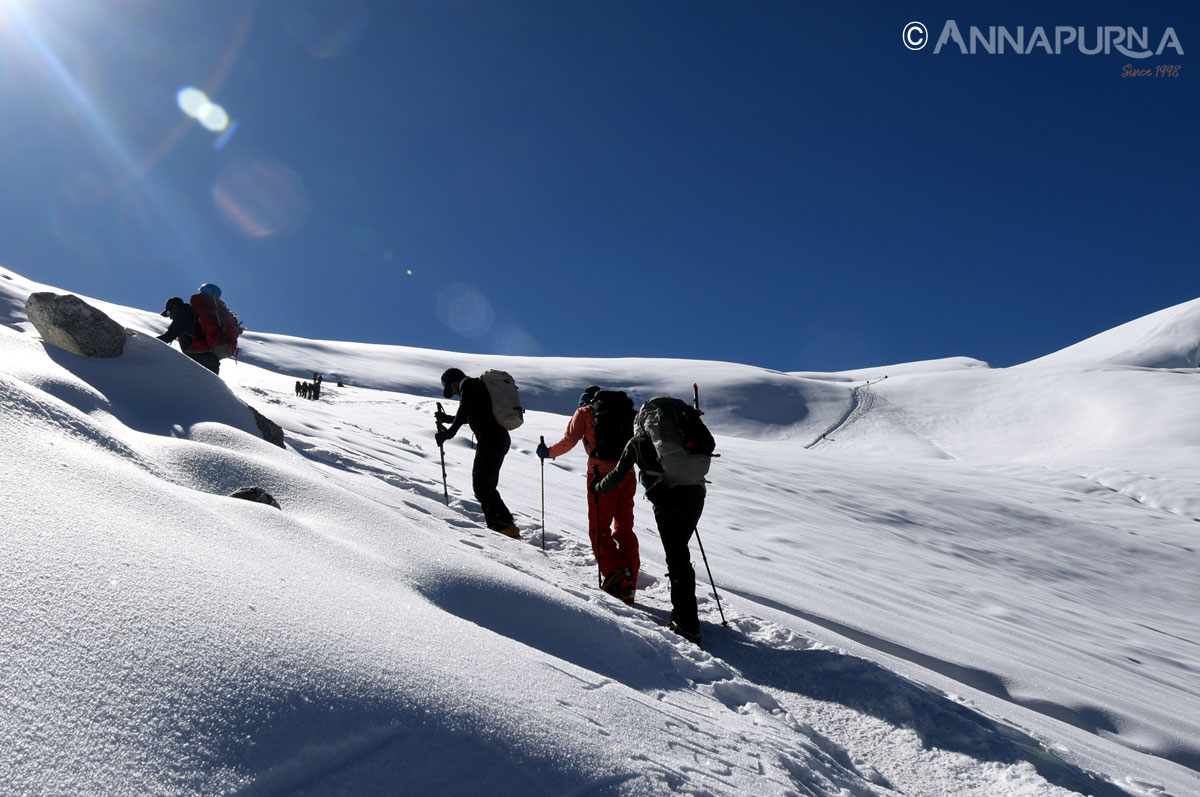
Summit day begins before dawn. Equipped with headlamps, climbers ascend gradually across snowfields and glacier terrain. The final section involves a steady climb that tests endurance and determination.
Reaching the summit of Mera Peak (6,476m) rewards you with one of the finest panoramas in the Himalayas. On a clear day, you can witness five of the world’s fourteen 8,000-meter peaks: Mount Everest, Lhotse, Makalu, Cho Oyu, and Kanchenjunga. This unparalleled 360-degree view of the Himalayas is the highlight of the Mera Peak climb.
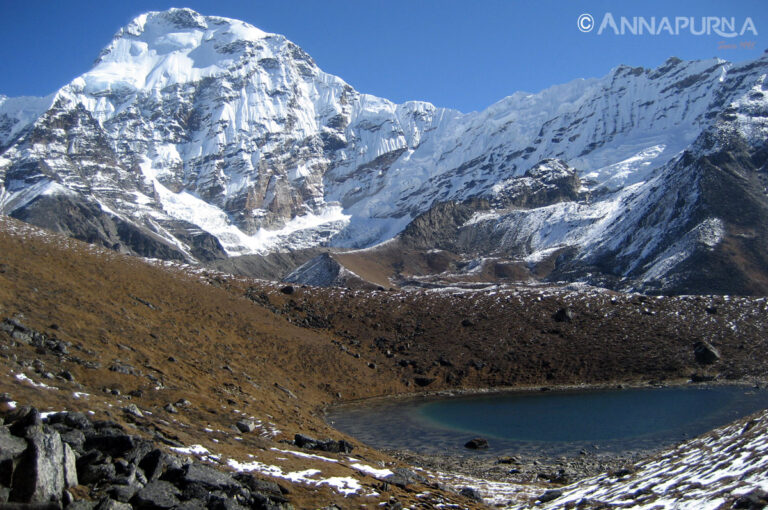
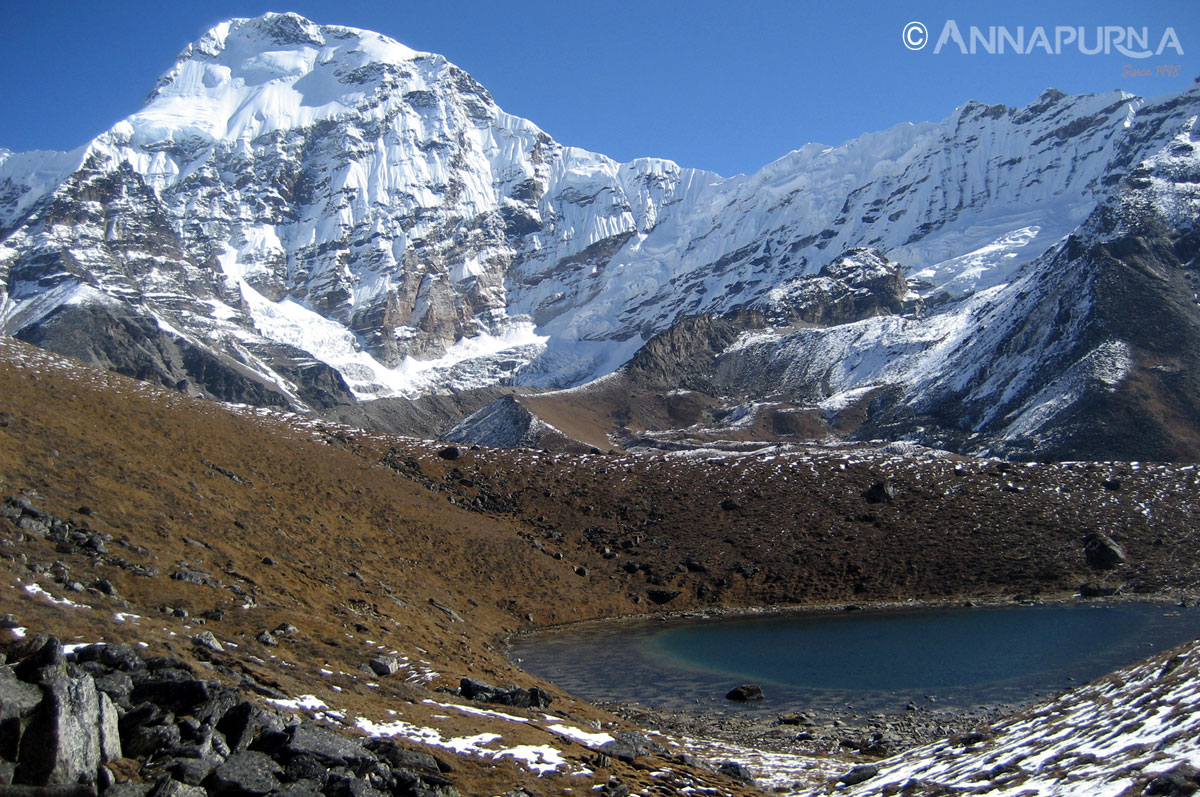
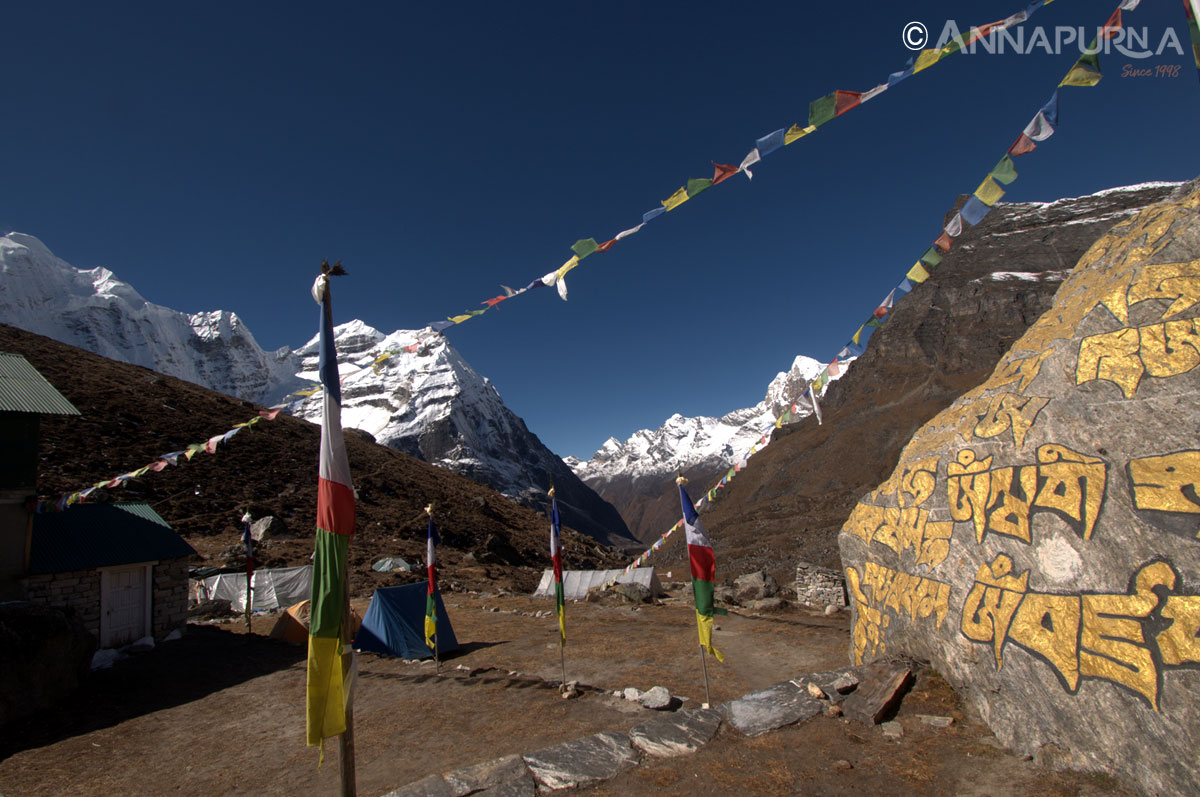
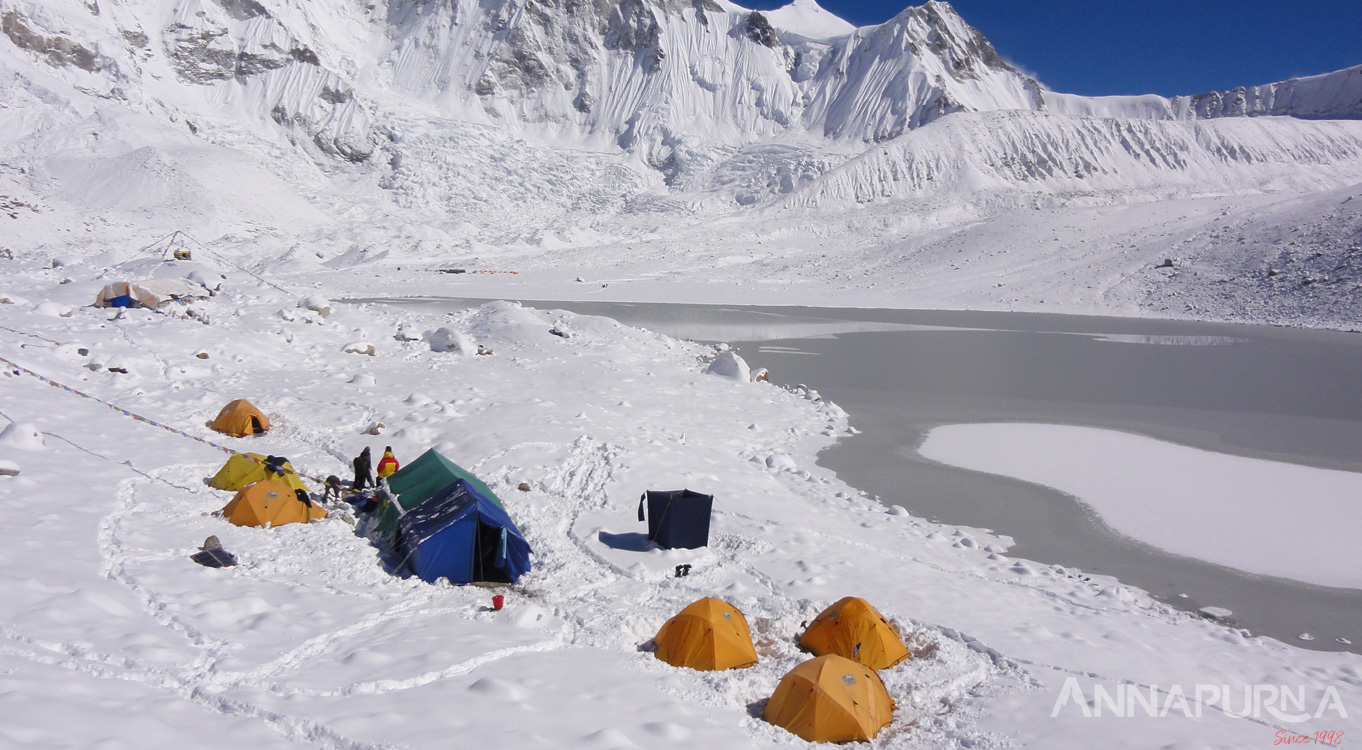
After climbing Mera Peak, you descend into the upper Hinku Valley, often called the Honku Valley, a true Himalayan sanctuary and wilderness of glacial lakes and moraines fed by sheer and beautiful summits. The route continues past Seto Pokhari (meaning white lake) and traverses the valley to reach a sheltered basin and then to Baruntse Base Camp. Baruntse Base Camp is situated on a sandy, grassy meadow at 5,250m to 5,450m elevation, often next to a small lake with spectacular views of the south face of Baruntse; a beautiful, scenic location.
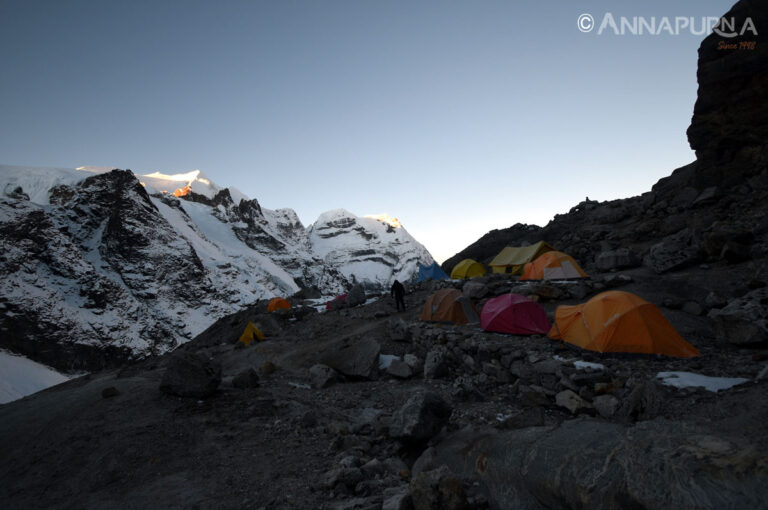
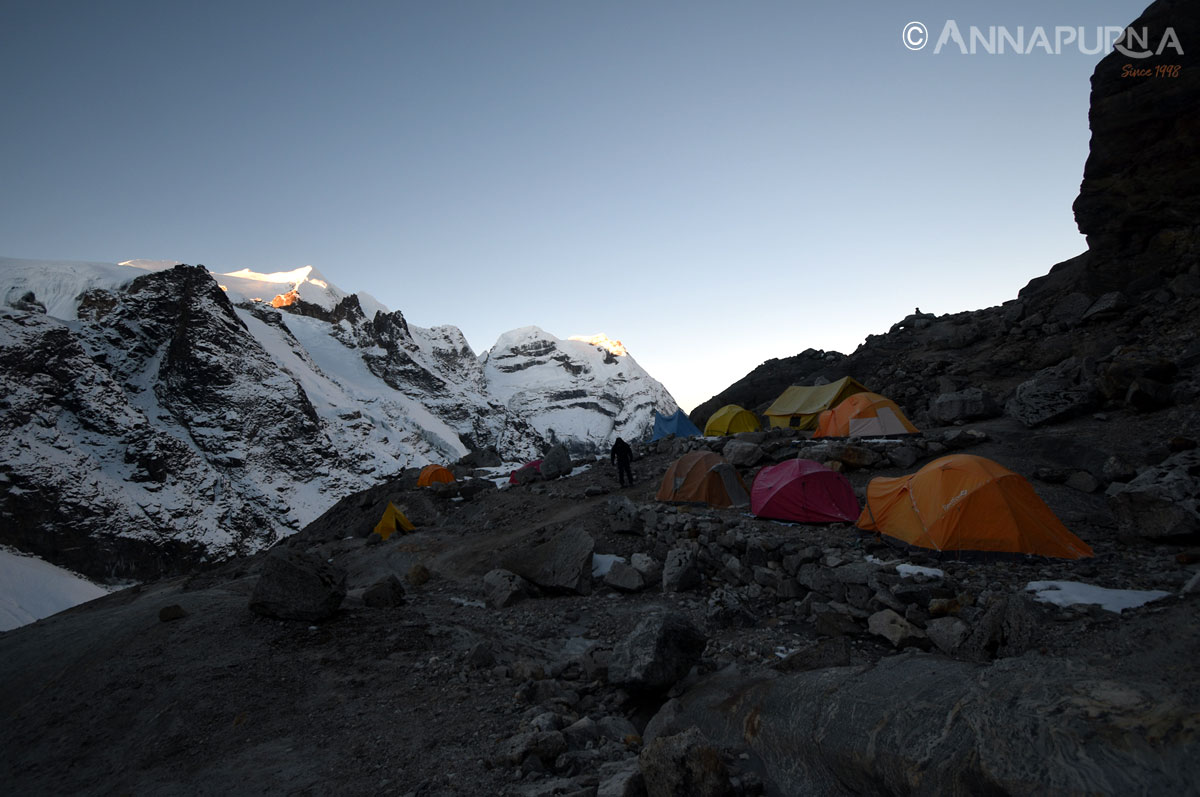
The Baruntse base camp serves as the home base for climbers, complete with a kitchen, dining, and individual sleeping tents, providing a comfortable hub for preparation and logistics. Expedition groups often spend 7-8 days here, establishing camps and preparing for the climb up the mountain’s southeast ridge, the summit, and the return to base camp. The approach from Lukla to Baruntse Base Camp is as much a part of the adventure as the climb itself, taking you through some of the most spectacular and remote mountain landscapes and offering a beautiful acclimatization summit at Mera Peak.
The standard Baruntse climbing route is its Southeast Ridge, used by the first ascensionists in 1954. The Baruntse is climbed from Base Camp by establishing a series of higher camps to manage altitude and distance. As with all expeditions to high mountains, the ascent is divided into distinct camp phases and distances, as follows.
The main expedition hub, the Base Camp, is located at 5,400 m on the Hunku Glacier. Baruntse Camp I, or the Advanced Base Camp, is often at 5,800 m-6,135 m. Camp I also serves as a deposit camp at the base of the West Col. From Camp I, fixed ropes are often placed on steep ice at 40°-70 ° to access the higher camps. Camp II (following the deposit camp) is the High Camp for Baruntse at 6,400 m – 6,650 m, situated on the Southeast Ridge. Camp II, or the High Camp on Baruntse, is the last camp before the summit push. Climbers spend a night at High Camp to position themselves for the final ascent.
The climb on Baruntse is technical, starting from Camp I, and involves glacier travel, crevasses, and steep snow and ice slopes. Scott Fischer, in a 1992 expedition account, described the climbing above Camp II as “straightforward, most done on the west side of the cornice, all snow and ice and no rock,” but noted there were “stretches of 70° and great exposure”. A prominent ice cliff around 7,000 m is another challenging obstacle to the summit.
The Mount Baruntse climbing ascent begins at early dawn (around 2:00 AM) from Camp II, following the classic southeast ridge and using a fixed-line route with ropes. The summit of Baruntse offers an unparalleled panorama of Everest, Lhotse, Makalu, and Kanchenjunga. After a short time to take in the achievement, the team begins the careful descent back to the high camps and, eventually, to Base Camp. The Baruntse climbing period, from Camp II to the summit and back, may require 11 to 14 hours, a feat that requires both physical endurance and mental fortitude.
The Baruntse expedition is not a simple out-and-back trek. The return to Lukla is a complete circuit, culminating in the crossing of the technical Amphu Laptsa Pass 5,845 m.
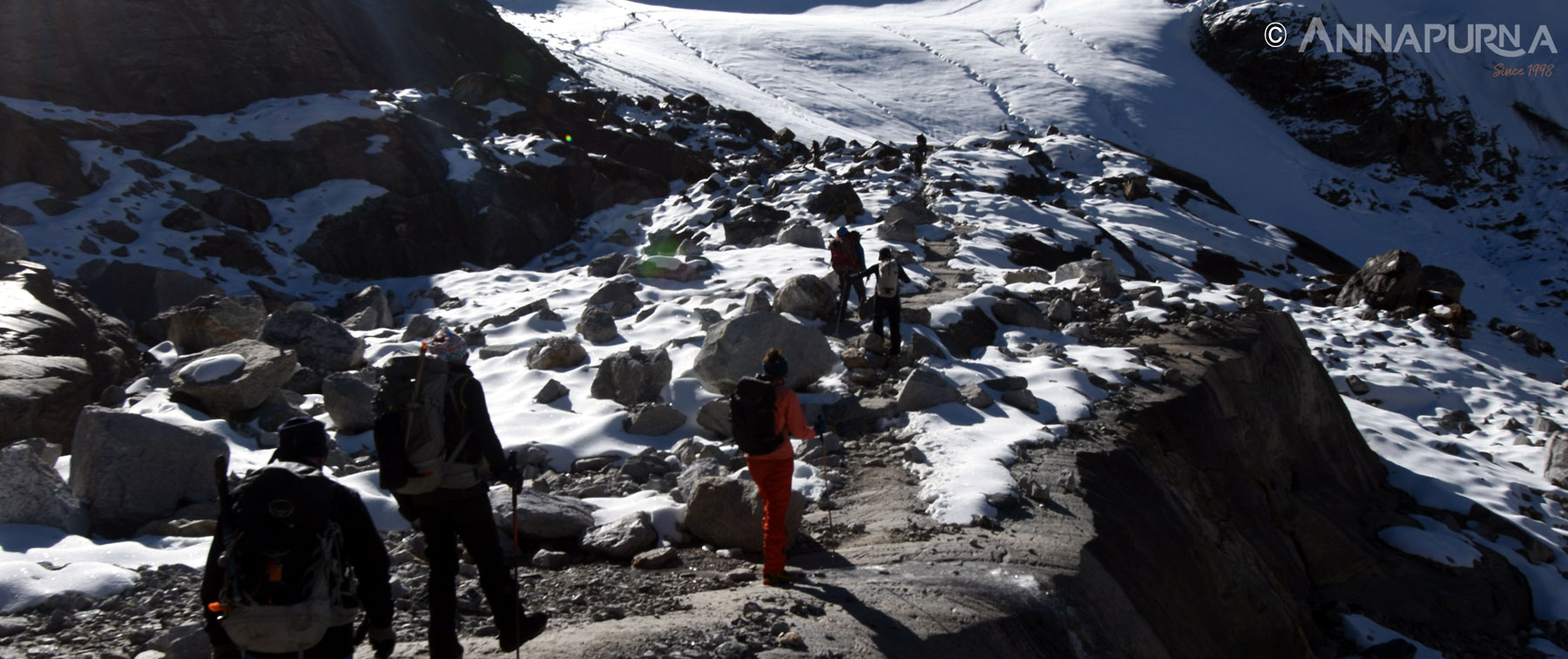
The trail from Baruntse Base Camp descends to the base of the Amphu Laptsa Base Camp, known as the Panch Pokhara (meaning five lakes). The crossing involves a pre-dawn start, Baruntse climbing a series of steep ice slopes, requiring the use of fixed ropes and crampons. Once over the pass, everyone drops on a rope, one by one, into the Imja Valley, a gateway to the Khumbu region. The final days of the expedition are a pleasant trek through famous Sherpa villages like Chhukung, Dingboche, Pangboche with its oldest monastery, Tengboche with the most active and spiritual monastery, and Namche Bazaar, before returning to Lukla for the flight to Kathmandu.
From the remote Hinku Valley to the exposed Southeast Ridge and the thrilling exit over the Amphu Laptsa, the Baruntse Climbing is the complete Himalayan package, offering a true test of skill and endurance that rewards climbers with a profound sense of accomplishment and memories of a lifetime.
The Baruntse Climbing ends with a return to Kathmandu, most of the time by a direct flight or by landing at Manthali Airport and driving back. The last day in Kathmandu involves a guided tour, distribution of summit certificates, free time, and a celebratory farewell dinner. Breakfast, free time until the designated time, the hour to return home arrives: a farewell Khata (sacred scarf), warm hugs, a drive to the international airport, immigration formalities, and a flight home, where everyone is waiting for you.
For a day-to-day itinerary, hotel information, customised programs, or anything else related to your travel plan. Please get in touch with annatreks@gmail.com or WhatsApp/Message at +977 985 10 30619. You can also message us on Facebook.
Dual Summit Ascent: Achieve the incredible feat of summiting two major Himalayan peaks: the panoramic Mera Peak (6,461m) and the technically rewarding Mount Baruntse (7,129m).
High-Altitude Challenge: Test your limits on one of the most demanding trekking and climbing circuits of Nepal, featuring the technical traverse of the Amphu Lapcha Pass (5,845m).
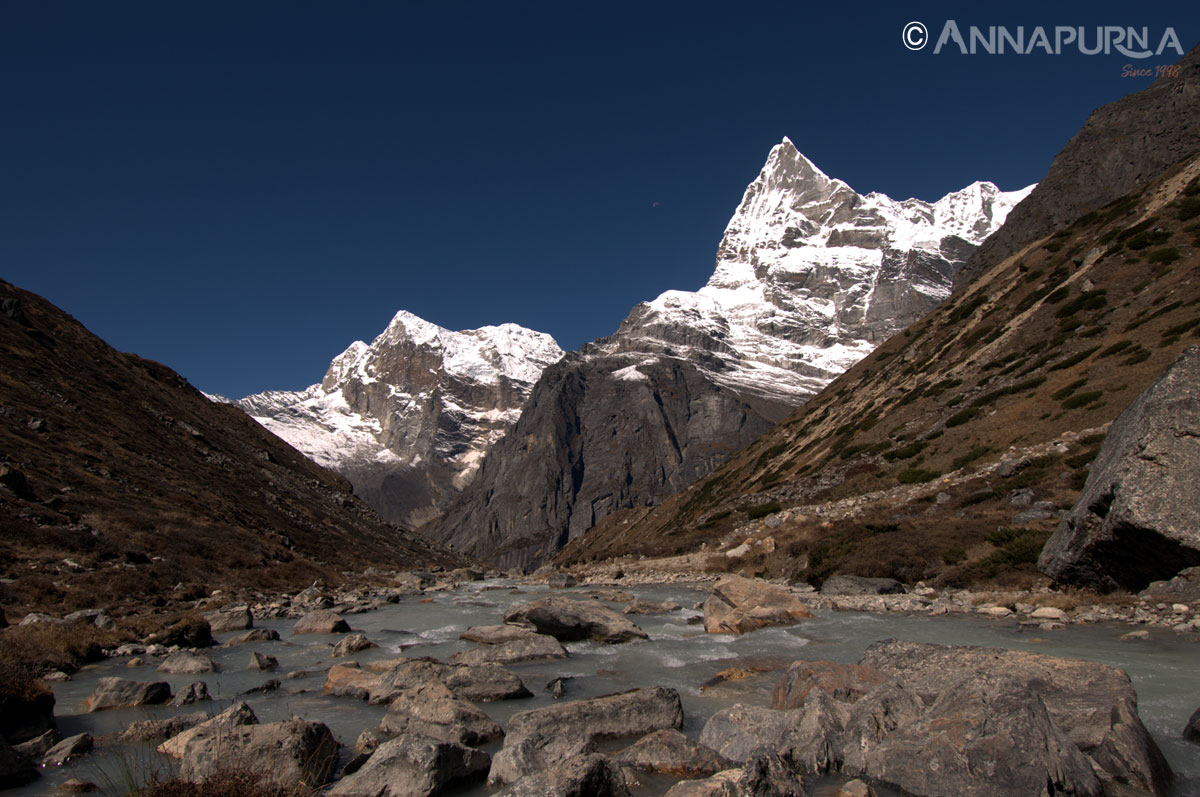
Remote and Pristine Valleys: Journey through the secluded and breathtakingly beautiful Hinku and Hongu Valleys, far from the busier trails of the Khumbu region.
Iconic Himalayan Panoramas: Witness an unmatched 360-degree vista from Mera Peak and Baruntse offering five of the world’s fourteen 8,000-meter giants: Everest, Kangchenjunga, Lhotse, Makalu, and Cho Oyu!
Arrive in Kathmandu (1,350m), traditional airport welcome, transfer to hotel, welcome dinner and trip briefing.
Free days for last-minute shopping and gear repacking, official permit formalities and cultural visit to the Boudhanath Stupa.
Scenic short flight to Lukla (2,866m), meet your trekking crew and explore Lukla village, A pleasant trek Chhutenga (3,200m) through mixed forests towards the first high pass. Cross the challenging Chhatrawa La Pass (4,600m) for your first major Himalayan views and each Chhatrawa (4,300m), descend into the beautiful Hinku Valley with stunning views of Mera Peak and reach to Kothey (3,580m). Trek up the Hinku Valley past yak pastures and visit a sacred cave and reach Tagnak (4,350m). Acclimatization in rest in Tagnak with optional hike to a glacial lake or a spur for close-up views of Mera Peak. Trek to Khare (5,045m), arrive at the base for Mera Peak climbs; spectacular views of the north face.
Explore the valley towards the Hinku Nup Glacier
Climb to Mera Base Camp (5,350m), roped ascent onto the glacier and a short climb to Mera La (5,415m). Climb to Mera High Camp (5,780m) with grand panoramic views from the high camp, set for summit push. Summit Mera Peak (6,461m), a pre-dawn summit push for breathtaking 360° views of five 8,000m peaks and descend to Kongma Dingma (4,850m).
Trek through the remote Hongu Valley to the sacred Seto Pokhari “White Lake” (5,004m) and meet climbing crew at Baruntse Base Camp (~5,300m) and prepare for the ascent.
Acclimatization rotations, establishing high camps, and summit attempt on one of classic 7,000m peaks of Nepal. Return to Base Camp, packing and cleaning the base camp.
Leave Baruntse Base Camp, pass the sacred Panch Pokhari (Five Lakes) and prepare for the technical pass crossing, cross Amphu Lapcha Pass (5,845m) to Chhukung (4,753m) with incredible views of Everest, Lhotse, and Makalu. Well-deserved rest at Chhukung with option to summit Chhukung Ri (5,540m) for world-class vistas.
Trek to Pangboche, to Namche Bazaar, to Lukla, fly to Kathmandu, celebrate your achievement back in the comfort of the city, official Debriefing and receive certificates. Farewell, transfer to the airport for your international flight home.
No essential information available.
Please inquire at annatreks@gmail.com

I had always thought that trekking in Nepal required a looong time and that it had to be done in either spring or autumn. That was until a friend told me that it was also possible to do it in winter, and that you can reach places like the Everest...
Read More
[gallery columns="1" link="file" size="full" ids="5878"] [gallery size="full" columns="1" ids="5903"]
Read More
In August 2025, my wife and I decided to take the famous Everest Base Camp trek with Annapurna Treks, and we had a wonderful experience thanks to the company's excellent organization. We had never been to Nepal before, but we knew that during the monsoon season there was a high...
Read More