Solo vs. Guided Journey in Nepal: Which Is Right?
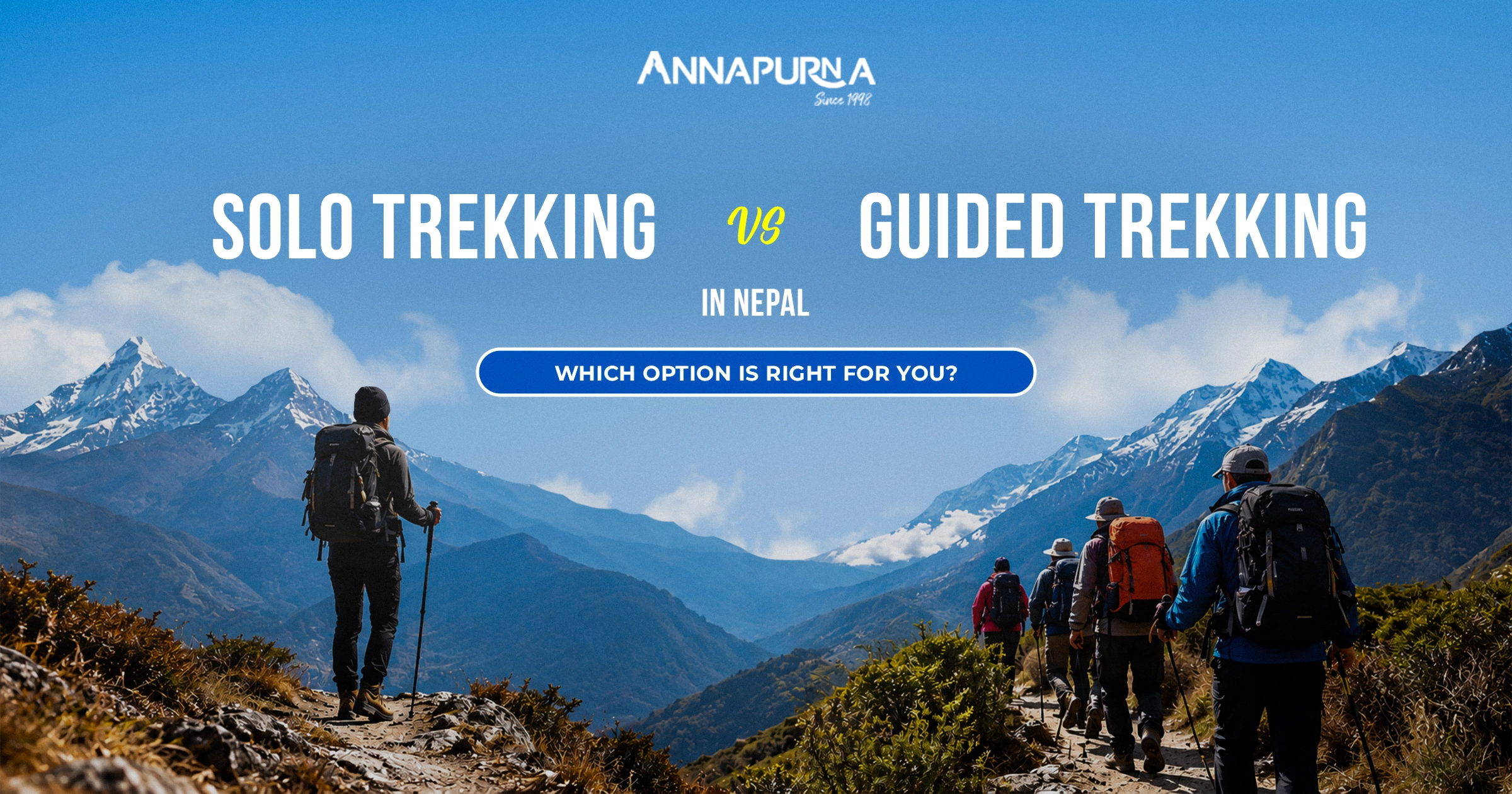
Solo vs. Guided Journey in Nepal: Which Is Right for You?
Nepal is one of the great trekking destinations in the world, drawing thousands of visitors every year. The country offers routes stretching from Kanchenjunga in the east to Api Saipal in the west, and from the lowlands of the Terai (just 65 meters above sea level) to Sherpani Col Pass at 6,100 meters. Such diversity demands different skills and preparation for a successful, meaningful journey.
One question travelers often ask themselves is: Should I hire a trekking or tour guide, or go it alone? The answer depends on your priorities, but safety and your trip objectives should always be part of the equation. In this short guide, we will explore the benefits and challenges of both options.
Understanding Trekking and Tours in Nepal
Trekking and touring in Nepal means visiting not only remote villages but also historic sites and natural landmarks. Some routes are straightforward; others can be difficult to navigate, especially in rain, snow, or fog, or when crossing glaciers, rivers, and mountain passes. When comparing solo versus guided trekking and tours, several factors come into play: safety, overall achievement, legal requirements, unforeseen obstacles, and convenience.
What Is Solo Trekking?
Solo trekking means traveling without a guide. Some travelers prefer this style of travel because it offers no limitations.
Benefits of Solo Trekking
Freedom and flexibility
When you trek alone, you set your own pace and decide when to start and stop; no consulting, no waiting.
A personal experience
Traveling alone lets you spend more time in nature or on whatever interests you, and enjoy solitude.
Lower cost
Without a guide’s expenses to cover, solo trekking is cheaper than guided alternatives.
Challenges of Trekking Alone
Navigation difficulties
Navigation can become complicated in remote areas, in cities without local information platforms, in villages with language and other local barriers, in bad weather, without internet, or across language and cultural divides.
Health and safety risks
Assistance may not always be available in the event of injury or illness.
Limited local knowledge
You may miss out on learning about local culture, history, hidden sites, and other must-see places.
Travel restrictions
Some trekking routes in Nepal restrict solo travelers and require a guide; even worthwhile routes that could be visited with just a one-hour or one-day extension.
What Is Guided Trekking?
Guided trekking means traveling with a government-qualified local guide who assists you throughout the journey. Most travelers prefer guided treks and tours because they simplify the journey and make every moment more comfortable and informative.
Advantages of Guided Trekking
Greater safety
Guides are trained to respond appropriately to emergencies, whether on a safari, birdwatching tour, cycling trip, city or village tour, short day hike, a full trek, or a multi-day/week journey.
Deep local knowledge
A guide shares local culture, traditions, monasteries, villages, and mountain history, and acts as a translator between travelers and locals.
Easier logistics
Guides coordinate permits, porters, transportation, cooking and kitchen staff, lunch stops, accommodation, camping sites, and other daily logistics; from breakfast to bed and dinner.
Route navigation
Travelers can relax and enjoy the trek while the guide handles the route and itinerary.
Emergency support
Guides know evacuation procedures and can coordinate help if needed.
Disadvantages of Guided Trekking
- Higher cost: A guide means a higher overall cost (meals, accommodation, transport, daily remuneration, and insurance).
- Less freedom: You follow a set schedule instead of making spontaneous decisions.
Solo vs. Guided Journey in Nepal: Key Differences
Safety
A guided journey is generally safer and recommended for first-time and repeat visitors alike, across all terrain, from cities and villages to the Terai, mountain bases, and high passes.
Price
Solo travel may seem cheaper at first, but unexpected transportation issues, road diversions, and emergencies can drive costs up to unbearable levels.
Culture
For cultural experiences, guided trekking offers more advantages than solo travel: local guides explain customs, religion, village life, and festivities, and help overcome language barriers.
Navigation
Guided trekking saves you the stress of navigation, while solo travelers must rely on maps, GPS, and trail signs.
Convenience
Guides handle permits, lodging, and other logistics, making the journey safer, easier, more informative, and less stressful.
What is the Best Choice?
For most visitors to Nepal, traveling with a guide on an organized trip is the best option. A guide tracks your daily activities, health, meals, and other needs; helps you cover distances and acclimatize properly; can adjust routes based on local conditions; promptly arranges accommodation if the itinerary changes; and fosters a family-like atmosphere with local people. Your guide also stays in contact with your travel agency in Nepal so that you can stay connected with family back home.
Ready to plan your Nepal trek? Contact Annapurna Treks & Expeditions Pvt. Ltd. to discuss guided options tailored to your goals, fitness, and schedule.
annapurna-trek