$ / Per Person
The Annapurna Circuit Trek is very popular in Nepal. It is breathtaking for its mountain scenery, cultural experience, spiritual touch, and the adventure of crossing the Thorong La Pass at 5416m. This short 15-day trek with varied exploration of the Annapurna region, covering Kathmandu Valley, lowlands experience, high Himalayan Passes, Gurung, Thakali, and Tibetan culture, sunrise at Sarangkot, and scenic short Mountain Flights for aerial views. The Annapurna Circuit Trek begins with arrival in Kathmandu, a warm welcome from a representative of Annapurna Treks and Expeditions, a jet-lag-shaking guided tour of Swayambhu (meaning self-originated), Patan Durbar Square, and Kathmandu Durbar Square, and a scenic drive to the foothills of Annapurna to encounter the trekking trails at Dharapani at 1,880 meters.
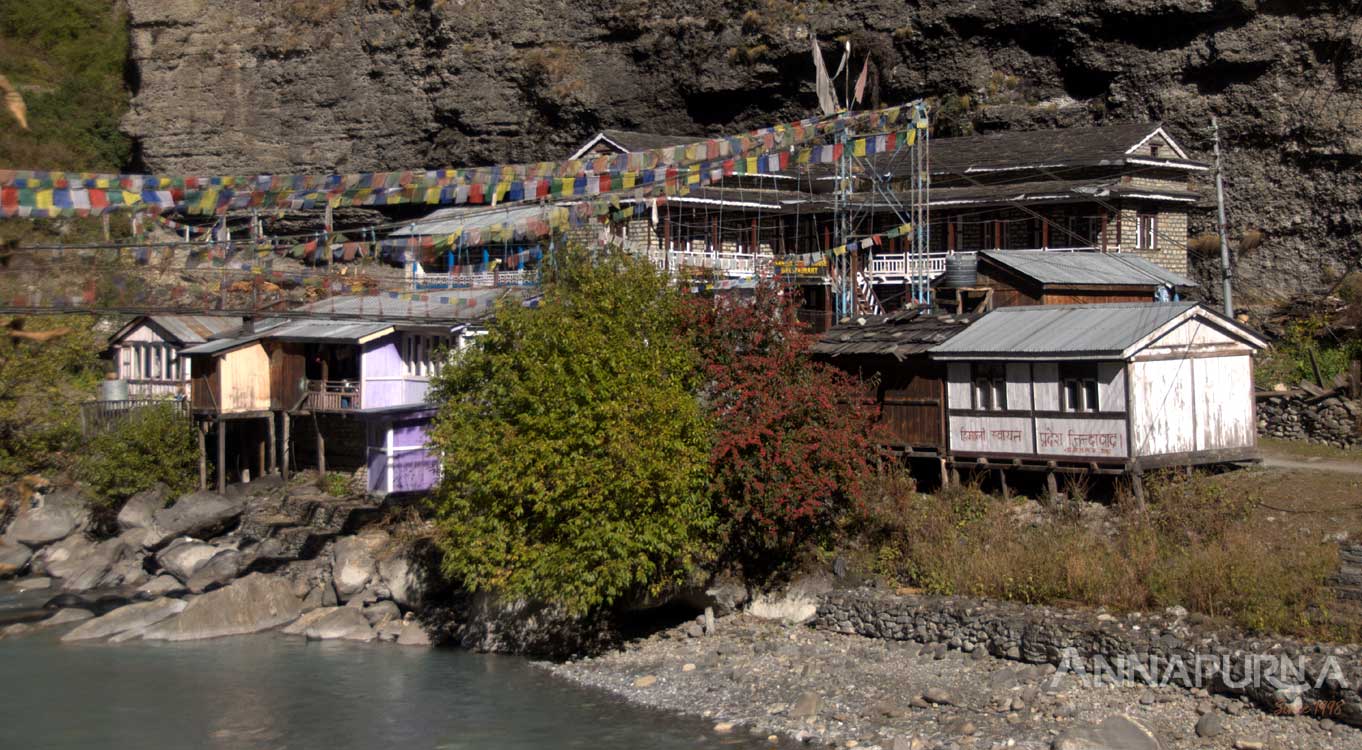
From Dharapani, the trek passes through the dense Annapurna Circuit trail, dotted with several tiny villages, stupas, and mani-walls adorned with prayer flags, to Chame at 2,713 meters, the administrative center of the Manang district. After Chame, the Annapurna Circuit trek takes you through pine and fir forests, suspension bridges, an apple garden, and crosses the Swarga Dwari, the gateway to heaven, and reaches Pisang at 3,200 meters on the plateau of the upper Marsyangdi Valley.
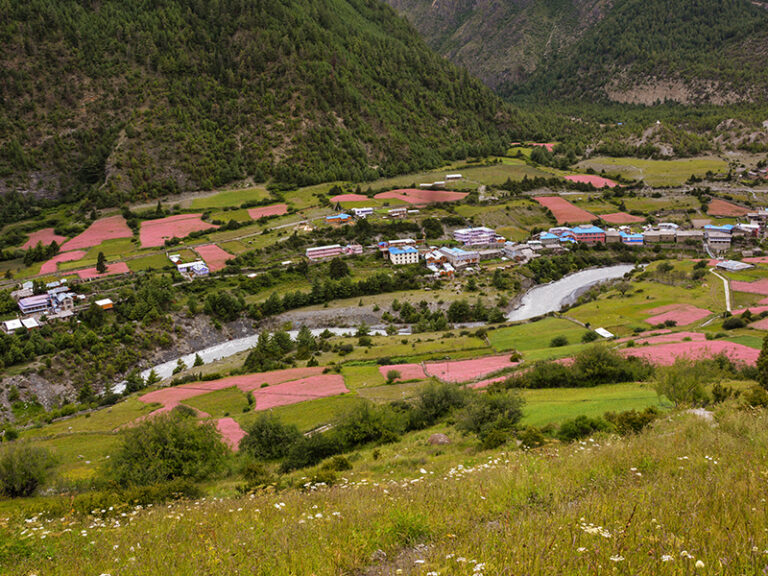
Pisang is the first village of the Nyesyang territory, which comprises six villages, and it offers a strong Tibetan cultural experience. The other villages you will visit in this itinerary are Gyaru, Ngawal, Braga, and Manang.
One of the most rewarding aspects of the Annapurna Circuit trek is the cultural experience. Tibetan Buddhism has a strong influence on the day-to-day lives of the Nyesyang territory. As mentioned above, this territory, the upper Marsyangdi Valley, known as the heaven and a site of pilgrimage (Nye Syang), comprises six major villages and includes sacred sites such as Mila Repa Cave, sacred lakes, and several ancient monasteries. The people in the Nyesyang Territory are also known as Mangis (meaning residents of Manang); the district is named after its main village, Manang.
You will see the people of Nyesayng territory practicing their ancestral traditions, including Tibetan Buddhist architecture, wearing traditional attire such as Chubas (for both men and women), Wearing Coral and turquoise jewelry, drinking salt tea, and following the Buddhist religion. And the villages and major trails between them are marked with ancient chortens, mani-walls, and prayer flags, and major village entrances are bordered by large entry gates. And each village has a monastery.
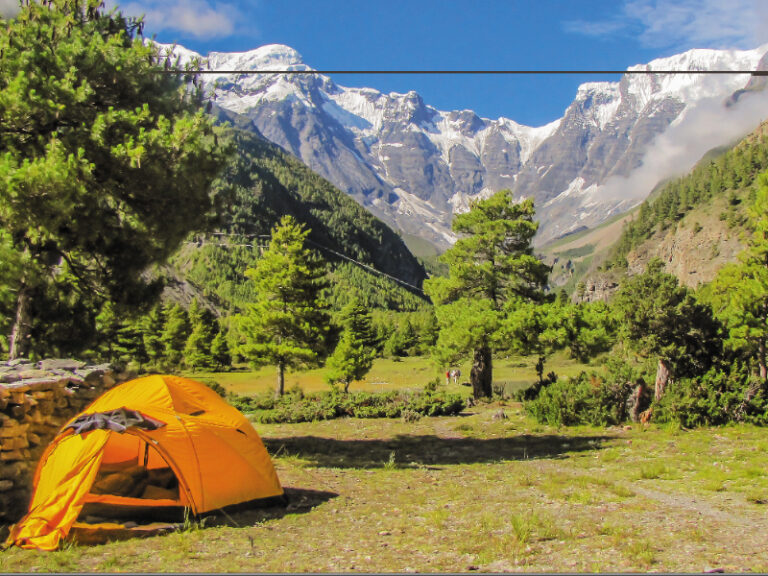
Leaving Manang behind, the trail begins its gradual ascent toward the most challenging and celebrated part of the Annapurna Circuit trek, the crossing of Thorong La Pass at 5,416m. The trail to Yak Kharka (4,216m) is also picturesque, offering vast panoramic views, grazing yaks, and herds of wildlife, including blue sheep. An overnight stop at Yak Kharka also offers a chance to shorten the Thorong Pass to Muktinath segment of the trail and to visit the Chulu West peak base camp as an exploration and acclimatization hike.
The Yak Kharka to Thorang Thorong High Camp trek is a short and panoramic trek. Some trekkers also trek from Manang to Thorong Base Camp, then cross the Thorong La Pass and reach Muktinath. Adding a day at Yak Kharka and an overnight at Thorong High Camp softens each day’s adventure, ensuring the headache-free enjoyment of the elevation and the views it offers.
After spending an overnight at the Thorong High Camp 4,600m, offering great views of Chulu Mountains, Yak Kawa Mountain, and Rock Noir (Kangshar Kang) 7,454 m in the Annapurna range. The next day is one of the iconic days of the Tilicho Lake Trek: the crossing of Thorong La and the entry into the Kaligandaki Valley. An overnight at Thorong High Camp softens the challenge of Thorong La Pass, which many ascend from its base camp. After about 2 hours’ gradual traverse through loose Himalayan scree, enjoying the luring views of the Chulu Mountain Range, Annapurna, Yak Kawa, and Thorong Peak, you will reach Thorong Pass.
The saddle of the Thorong Hill Ridge, or Thorong Pass, is marked by a huge pile of stones and colourful prayer flags left by trekkers. Just as you start to descend toward Muktinath, into the Kali Gandaki Valley, you get lured by the grandeur of the views ahead, a deep desert valley dotted with tiny villages and crowned by the giant Himalayan peaks of Dhaulagiri and Tukche Peak. A snaking trail quickly descends you to the west side of the Thorong Pass Base Camp for a well-deserved rest and lunch. After lunch, there is an easy trek through a wide meadow with deep cuts to Muktinath.
Muktinath is a pilgrimage site for both Hindus and Buddhists. The Mukti Tsetra (Muktinath Region) is visited by devotees seeking spiritual cleansing and peace. There are 108 holy spouts of water, everlasting flames of stone and soil (known as Sala Mebar and Dola Mebar), Narsingha Monastery, and other sites to visit. The surroundings of Muktinath are home to several ancient monasteries and forts.
The last day of the trek includes a loop covering the villages of Lupra and Thini, visiting authentic villages and monasteries that many trekkers who completed the classic Annapurna Circuit Trek and the Upper Mustang Trek have not explored. The trek ends directly in Jomsom, the headquarters of Mustang District and the starting and ending points for many treks on the Annapurna Circuit, Upper Dolpo, and, of course, the Upper Mustang and Saribung Treks.
After a celebratory overnight in Jomsom, an early morning 20-minute flight takes off for Pokhara, flying above the Kali Gandaki Gorge, the deepest in the world, and both sides are sheerly guarded by the 8-thousander, the Dhaulagiri and Annapurna! The Himalayan scenery is endless until your flight touches the runway of Pokhara Airport.
As you unboard, easing your Airplane ear, you will be greeted by the grand and beautiful Himalayan chain of Annapurna, Lamjung, and Machhapuchhre (Fish-Tailed) in a charming row above Pokhara City. Pokhara is a beautiful city known for its natural beauty and easy access from various parts of Nepal. Pokhara, a small valley in the foothills of Annapurna, offers short cultural treks and tours, day hikes to the villages, Paragliding, boating on its several lakes, rafting on the Seti River, and basic to luxurious hotels and resorts in its serene Himalayan atmosphere. However, Pokhara city is only 820 metres above sea level and warmer than Kathmandu.
After an overnight in Pokhara, a short 25-minute flight takes you to Kathmandu to complete your iconic Tilicho Lake and Annapurna Circuit Trek, followed by a full-day guided tour of Pashupatinath Temple, Bhaktapur, Boudhanath, a farewell dinner, and a warm send-off, paving a smooth flight back home, where everybody is waiting for you!
Annapurna Circuit trek offers you lowland and highland experiences of Nepal, including dense forests, alpine meadows, glacial valleys, high mountain passes, and dry mountain deserts, as well as a varied cultural, spiritual, and human landscape.
From various ethnic and religious groups in the lowlands to hilly Gurung communities and villages to Buddhist monasteries and sacred pilgrimage sites, the route offers some of the most immersive trekking experiences.
The Iconic Thorong La Pass at 5,416 metres adds a touch of glory to your adventure. It offers views of Dhaulagiri and the Annapurna range, as well as the Marshyangdi and Kali Gandaki Valleys.
Places like Swarga Dwari, Braga, Ice Lake, Thorong La, and Muktinath create deep, lasting memories and imbue them with spiritual meaning.
The Annapurna Circuit trek is the first trail to be walked by foreigners; it is a complete Himalayan journey filled with adventure, culture, spirituality, and unforgettable mountain beauty. Over 15 extraordinary days, you will travel from the historic heart of Kathmandu to the wild high passes of the Annapurna region, cross one of Nepal’s most legendary trails, and return with lifelong memories of the mountains and people, making it a special journey in the Himalayas of the Annapurna and Dhaulagiri regions.
For all travellers, whether amateur or expert hikers seeking a classic Nepal trekking experience with dramatic scenery, cultural diversity, and a true Himalayan journey, the Annapurna Circuit trek remains one of the finest adventures in the Nepalese Himalayas.
For a day-to-day itinerary, hotel information, customised programs, or anything else related to your travel plan. Please get in touch with annatreks@gmail.com or WhatsApp/Message at +977 985 10 30619. You can also message us on Facebook.
High-altitude adventure: Cross the endurance-testing Thorong La Pass (5,416m), surrounded by the majestic peaks of Annapurna and Dhaulagiri.
Feel the Sacred Whisper: Absorb the peace of Muktinath, where Buddhist and Hindu traditions merge amidst the eternal flame and 108 holy water streams.
Medieval Villages: Soak yourself in Tibetan-influenced Gurung culture in stone-built villages (Pisang, Gyaru, Ngawal, Manang) with ancient monasteries, prayer walls, and traditional chubus (traditional attire).
Geographic views: From rice fields to lush rhododendron forests to arid highland deserts, and luring views of Annapurna II/III/IV, Gangapurna, Dhaulagiri, Tilicho Peak, Tukche Peak, and Nilgiri.
Acclimatisation Excursion: Prepare for the Thorong La Pass with a challenging hike to Ice Lake (4,620m), a physiological and visual highlight offering stunning glacial panoramas.
Traditional welcome, trip briefing, and time to relax or explore local shrines.
Drive for ~9 hours (Kathmandu → Besisahar → Dharapani via Jeep), Scenic drive alongside rivers, views of Ganesh Himal and Manaslu ranges.
Trek for ~5 hours, first views of Annapurna II, entering the high, dry Himalayan landscape.
Trek for ~5 hours, pine forests, Tibetan-style village of Brathang, crossing the “Gateway to Heaven” into the Manang valley.
Trek for ~3 hours, stunning views of the Annapurna range, visiting a medieval stone village and its monastery.
Trek for ~5 hours, visiting ancient Ghale kingdom villages, 600-year-old Braga monastery, panoramic mountain views.
Trek for ~6 hours (including hike), challenging day hike to Ice Lake (4,600m) for essential acclimatization and breathtaking panoramas.
Trek for ~4 hours, landscape shifts to arid, high-altitude terrain, exceptional views of Gangapurna and Annapurna III.
Trek for ~4 hours, short, steep climb for better acclimatization, potential sightings of blue sheep.
Trek for ~7 hours, early morning ascent over the highest point of the trek, Thorong La Pass (5,416m). Visit the sacred Muktinath temple complex.
Trek for ~5 hours, final trekking day through the dramatic Kali Gandaki Gorge with views of Dhaulagiri and Nilgiri.
Flight for ~22-minute scenic flight, spectacular aerial mountain views, relaxing evening at Pokhara Lakeside.
Sunrise views over the Himalayas from Sarangkot, visi Pumdikot, Peace Pagoda, 25-minute flight back to Kathmandu.
Free day for exploration or an optional guided city tour.
Transfer to Kathmandu International Airport for your departure.
The Annapurna Circuit Trekking is a rewarding yet challenging adventure suitable for a range of participants, provided they meet specific physical and mental fitness criteria. These details are essential for overall preparation and understanding the Annapurna Circuit Trekking. The following are the essentials for preparing your journey.
| Duration | 15 days |
| Max Elevation | Thorong La Pass (5,416 m). |
| Grade | Challenging due to diverse landscape altitude (walk 3–8 hours/day). |
| Best Seasons | March-June and September-November |
| Highlights | Nearest views of Annapurna, Manaslu, Tilicho, Nilgiri, Dhaulagiri, Tukche Peak, diverse geographical landscapes, many cultural villages, and seeing sacred Chumig Gyatsa (Muktinath). |
| Route | Kathmandu → Besisahar → Dharapani → Chame → Pisang → Gyaru → Manang → Thorong La → Muktinath → Jomsom → Pokhara. |
| Category | Detail |
| Who can join these treks | The trek suits, health-conscious travellers aged 15+ who can handle high altitudes and other minor uphill/downhill challenges. With no upper limit, seniors can join if they are physically fit and medically cleared. First-timers are welcome with basic to adequate training. All treks are led by our experienced guides and helpers, with overall care provided. |
| Group Policy | We specialise in premium private treks and tours. We do not combine individual travellers into groups. Your “group” is defined solely by the friends, family, or colleagues you choose to travel with when booking a specific program. This policy guarantees a personalised and exclusive adventure tailored just for you. |
| Required Permits | ACAP (Annapurna Conservation Area Permit) |
| Guide | Guides are mandatory, solo trekking has been prohibited since April 2023. As of March 2025, all trekkers are required to hire a government-licensed guide for safety and environmental reasons. |
| Physical Preparation | Require cardio and stamina excersies for 2–4 weeks of basic running, cycling, or stair climbing (aim for 5 km in 1 hour). Strength gain training such as lunges, squats, and backpack hikes (build to 10–15 kg only if you are not taking a porter service). |
| Safety and Health | Be mindful of Altitude Sickness, recognise symptoms (headaches, nausea, dizziness). Take preventative measures (such as taking Diamox/acclimatising rest days), and descend immediately if symptoms become severe. There is Medical Clinics in Manang for AMS treatment. |
| Vaccinations | Consult a doctor for recommendations (recommended for typhoid, hepatitis A/B, and tetanus). |
| Insurance | Must cover emergency helicopter rescue (up to 5,500 m) and medical service. We strongly advise all trekkers to invest a little more in addition to the trip cost and purchase comprehensive insurance that covers all kinds of emergencies, ensuring you are financially secure and prepared for any unforeseen circumstances. |
| Water and Food | Avoid tap water; use purification tablets or bottled water. Menus expand at lower elevations (daal bhat, pasta, momo, noodles, apple pie). Eat carb-rich meals (daal bhat, garlic soup for altitude). Avoid meat (limited refrigeration) and salads (tap water risks). |
| Cash | There are ATMs Jomsom and Pokhara, but it is recommended that Nepalese rupees be carried (teahouses and remote areas don’t have ATMs). Convertible currencies are accepted, but they convert at a lower rate. |
| Connectivity | Limited Wi-Fi (available for a fee in most lodges). One can buy a local SIM in Kathmandu, though coverage is limited and sporadic. |
| Best Time to Trek | October–January (clear skies) or March–May (rhododendron blooms). The short treks are open year-round. |
| Tipping | Tips for guides/porters: please allow $5–$10/day per member. |
The following table outlines seasonal packing priorities, which include all essentials, as well as a clothing layering system for variable conditions.
| Season | Clothing | Key gear |
| Spring/Autumn | Moisture-wicking base layers, insulated jacket, waterproof shell | -15° to -20°C sleeping bag, Microspikes (for High Pass). |
| Winter | Heavy thermal base, down jacket/pants, balaclava | Microspikes, -30°C sleeping bag, microspikes |
| Monsoon | Quick-dry clothing, a full waterproof suit | waterproof pack cover, insect repellent, -10-15°C sleeping bag |
Clothing Layering System for Variable Conditions |
||
| Layer Type | Key Items | Purpose |
| Base Layer | Merino wool/synthetic tops and leggings | Moisture-wicking; temperature regulation |
| Mid Layer | Fleece jacket; down vest/jacket | Insulation: retains body heat |
| Outer Shell | Waterproof/windproof jacket and pants | Shields against rain, snow, and wind |
| Accessories | Warm hat, sun hat, buff, waterproof gloves (inner + outer), wool socks (2–3 pairs) | Protects extremities from cold/frostbite |
| Foot ware | Broken-in waterproof hiking boots + Camp shoes. |
| Regular Essentials | Sunglasses, trekking poles (for mud/snow), reusable water bottle, headlamp, first-aid kit, portable charger, high-SPF sunscreen, lip balm, toilet paper, earplugs. |
| Backpack | 25–30L (Daypack for you). |
| Duffel Bag | ≤15 kg (for Porter). |
| First-Aid Kit | Bring personal medications, agency provides group first-aid medical box. |
| Note | Use packing cubes to organize gear. Limit clothing to 2–3 sets of quick-dry layers |
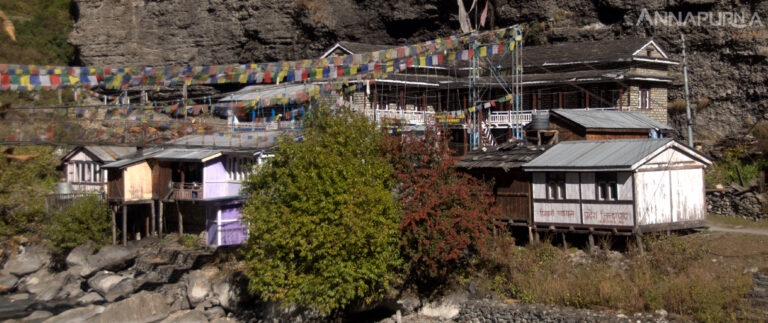
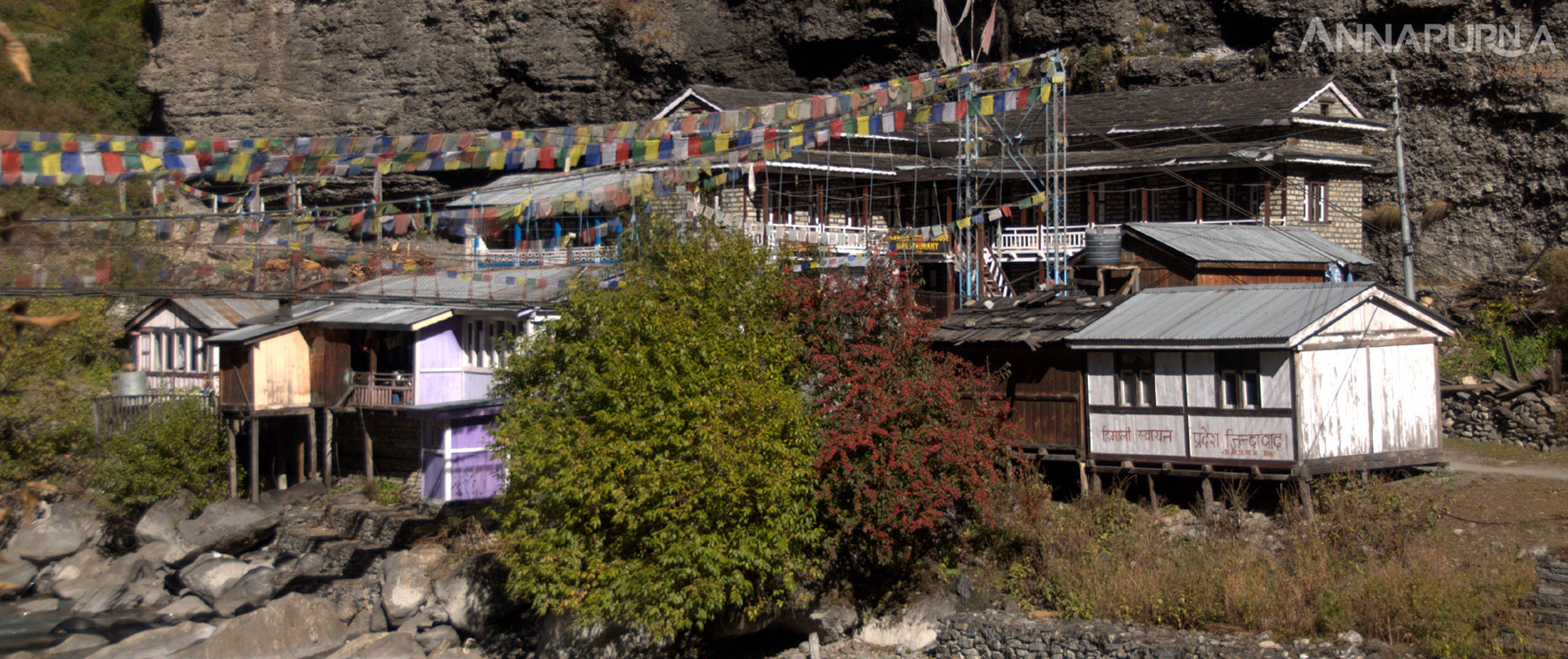
On your trek, you will stay in simple, family-run lodges located among the peaks and cultural villages. These welcoming Nepali lodges offer a heartwarming glimpse into local life, where generations often gather around a crackling fire to share their daily past, history and stories. Accommodations are generally rustic yet comfortable, offering basic yet cosy rooms with thick blankets, quilts/pillow, providing a warm respite after a long day of hiking. Lodge accommodations are also cultural hubs; most lodges have a traditional communal kitchen and dining room, where the aroma of local spices and the laughter of travellers fill the air. Most lodges have shared bathrooms/toilets, which are more than the expected standard at higher altitudes. The availability of hot shower facilities depends on altitude; lower valleys with warmer temperatures usually offer piped/running water, while higher elevations with cooler temperatures often offer bucket-style showers (paid). However, embrace the brisk mountain breeze, though! Bathing in the cold can feel less inviting.
Dress modestly (cover shoulders / knees in villages).to show respect and consideration for the local culture and customs. Circumvent clockwise around the Mani walls, stupas, and monasteries, and while visiting the inside of the monasteries. Use the right hand to eat and give/receive items. Remove your shoes / sandals when entering the kitchen, visiting homes, monasteries and temples. And ask permission before photographing people / temples / monasteries. Avoid photographing children when they are alone or without family permission. Avoid public displays of affection. For eco practices, carry out trash, use biodegradable products, and avoid plastic bottles(carry a reusable water bottle).
Rent/buy a down jacket/sleeping bag in Kathmandu to save space.
Please contact at annatreks@gmail.com

I had always thought that trekking in Nepal required a looong time and that it had to be done in either spring or autumn. That was until a friend told me that it was also possible to do it in winter, and that you can reach places like the Everest...
Read More
[gallery columns="1" link="file" size="full" ids="5878"] [gallery size="full" columns="1" ids="5903"]
Read More
In August 2025, my wife and I decided to take the famous Everest Base Camp trek with Annapurna Treks, and we had a wonderful experience thanks to the company's excellent organization. We had never been to Nepal before, but we knew that during the monsoon season there was a high...
Read More