$ / Per Person
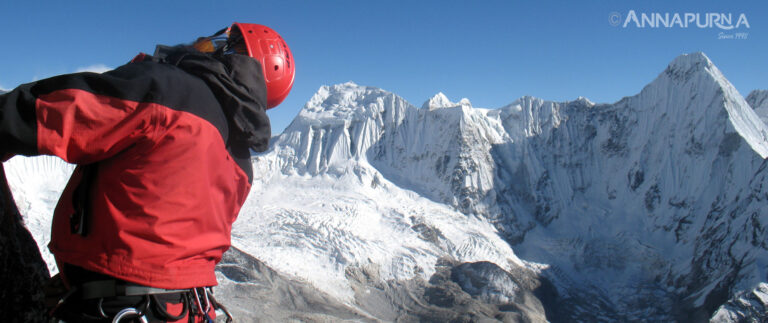
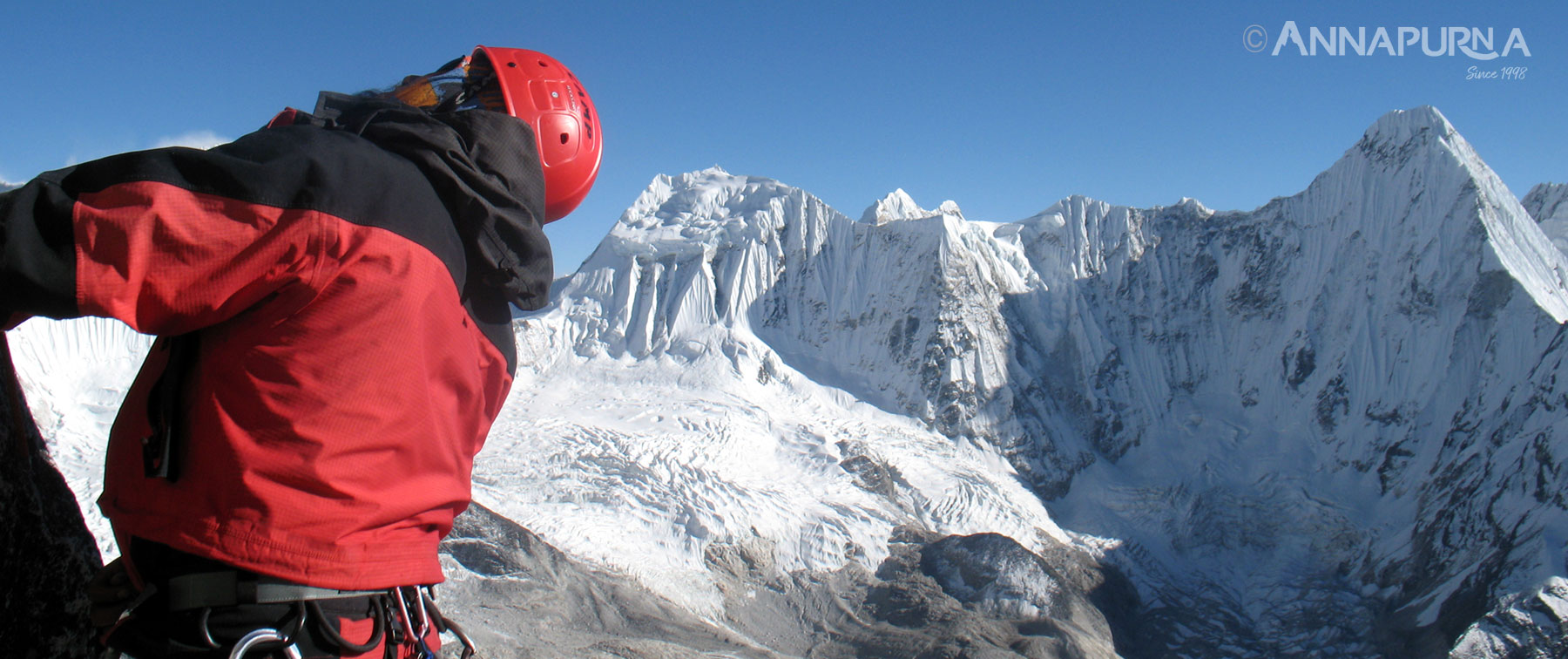
The Ama Dablam Expedition is one of the most prestigious and technically rewarding climbs in the Nepal Himalayas. Rising solitarily, striking pyramid shape at a height of 6,812 meters in the Khumbu region. Its iconic hanging glacier is known as Mount Ama Dablam, the “Dablam”, which drapes its southwest face. Ama Dablam expedition offers a true test of high-altitude mountaineering, combining technical rock, ice, and alpine climbing, and delving into the cultural tapestry of the Sherpa heartland.
This expedition is a complete Himalayan journey, extending beyond the climb itself to immerse climbers in the legendary Khumbu Valley. The adventure begins with arriving in Kathmandu, final logistical preparations, and introductory cultural exploration. From Kathmandu, climbers hop on a flight to legendary Lukla Airport and immediately begin the walk, traversing several Sherpa villages, ancient monasteries, and rhododendron forests. The route to Ama Dablam Base Camp (4,600m) is flanked by some of the highest peaks, such as Everest, Lhotse, Nuptse, and Thamserku, providing a dramatic and inspiring prelude to the technical challenges ahead.
For experienced mountaineers, Ama Dablam represents the ideal alpine challenge. Ama Dablam is a satisfying mountain for experienced climbers, offering a mix of technical difficulty on rock, ice, and snow, as well as altitude. Moreover, Ama Dablam is a straightforward destination that does not require the logistical complexity of other similar-altitude peak expeditions. Ama Dablam is the finest “technical peak” in the Himalayas for climbers looking to refine their skills on a world-class objective.
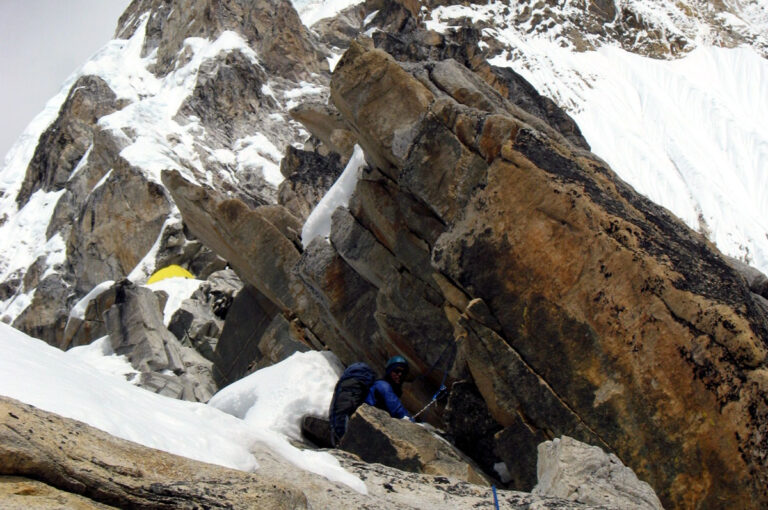
Ama Dablam offers many technical and intimidating sections, including the Yellow Tower, the Mushroom Ridge, and the Ice and Rock terrain to access Dablam, as well as the sheer Ice and Snow slope route to the summit. Ama Dablam demands sustained physical endurance, mental fortitude, and sound decision-making in technical applications under high-altitude, intimidating conditions. The reward is standing on a soaring summit with an unmatched alpine perspective, or even if you don’t make it, a satisfying return.
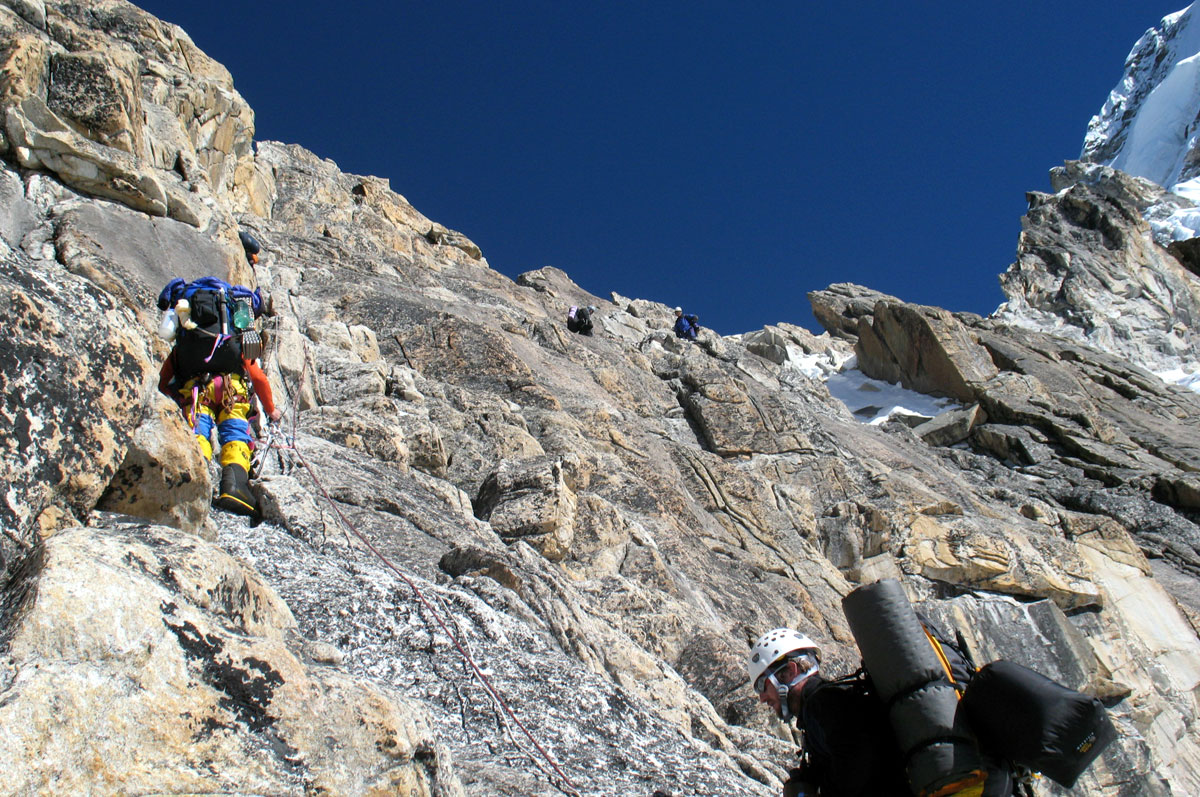
Technical Alpine Climbing: Navigate steep rock ribs, exposed ridges, and ice-covered sections using fixed ropes in an alpine-style environment.
Enjoy the crux of the climb: Experience the crux of the hanging summit to Ama Dablam Camp II, the vertical ice and rock technical terrain to Camp III, which many climbers do not set these days, and the famous hanging glacier, the Iconic Dablam, defining feature after which the name of Ama Dablam originates.
Acclimatization: This crucial climbing section is structured around a rotation climb between Base Camp, Camp I, and Camp II to optimize high-altitude adaptation, sharpen technical knowledge, and prepare for the summit push, and enjoy the climb on full scale.
Cultural Experience: Engage with the traditions of the Sherpa community, from the bustling streets of Namche Bazaar to the spiritual serenity of Tengboche and Pangboche Monastery.
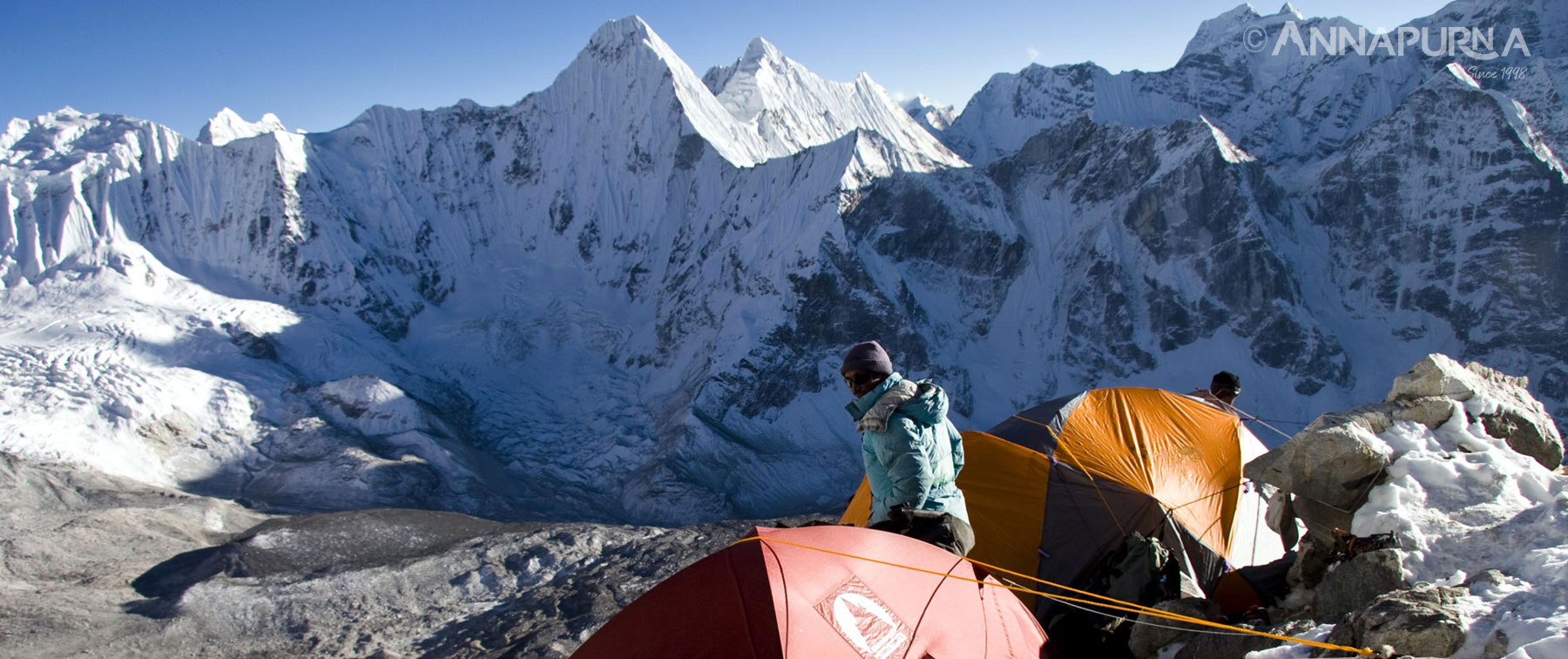
Unparalleled Panoramas: Stand atop a summit renowned for offering one of the most breathtaking 360-degree views in the Himalaya, with close-up vistas of Everest, Lhotse, Makalu, and Cho Oyu, every moment while on Ama Dablam.
The Ama Dablam Expedition is deeply rooted in the culture of the Khumbu Sherpa people. The approach route passes through Namche, Khumjung, and Pangboche, the cultural and historical villages. In these Sherpa villages, traditions are part of daily life, and Buddhist spirituality serves as the guiding principle. A central component of the expedition is the Puja ceremony, conducted by local monks at Ama Dablam Base Camp.
The Climbing Puja to the Mountain deity is a sacred Tibetan Buddhist ceremony that holds deep spiritual and cultural significance for the Sherpa people. The purpose of Puja is to ask the mountain deities for permission to climb and for safe passage for the team. It is considered so important that many Sherpas will not venture onto the mountain without the Puja.
The Puja ceremony is a beautiful and meaningful event that brings the entire expedition team together and marks the start of the adventure. The Puja is performed by a high Lama (Buddhist monk) from Pngboche. The Puja is a powerful experience that solidifies the bond among team members and marks them as permitted by deities and spiritually ready to begin their ascent above base camp. This cultural connection here highlights a profound respect for the environment, honoring the natural power of each peak.
Ama Dablam is an intimidating mountain that demands prior high-altitude and technical experience, proficiency with crampons, ice axes, and fixed-line ascenders, and the ability to descend steep, intimidating sections.
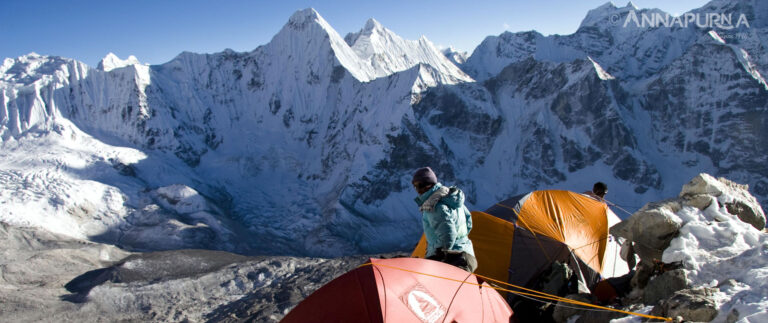
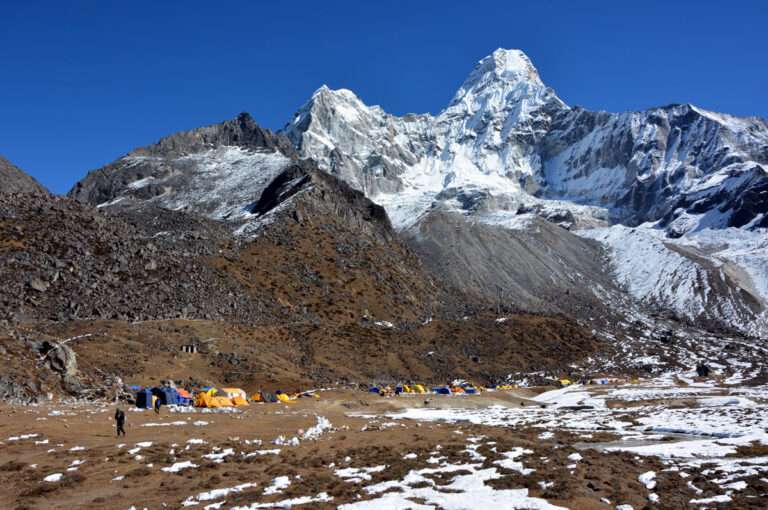
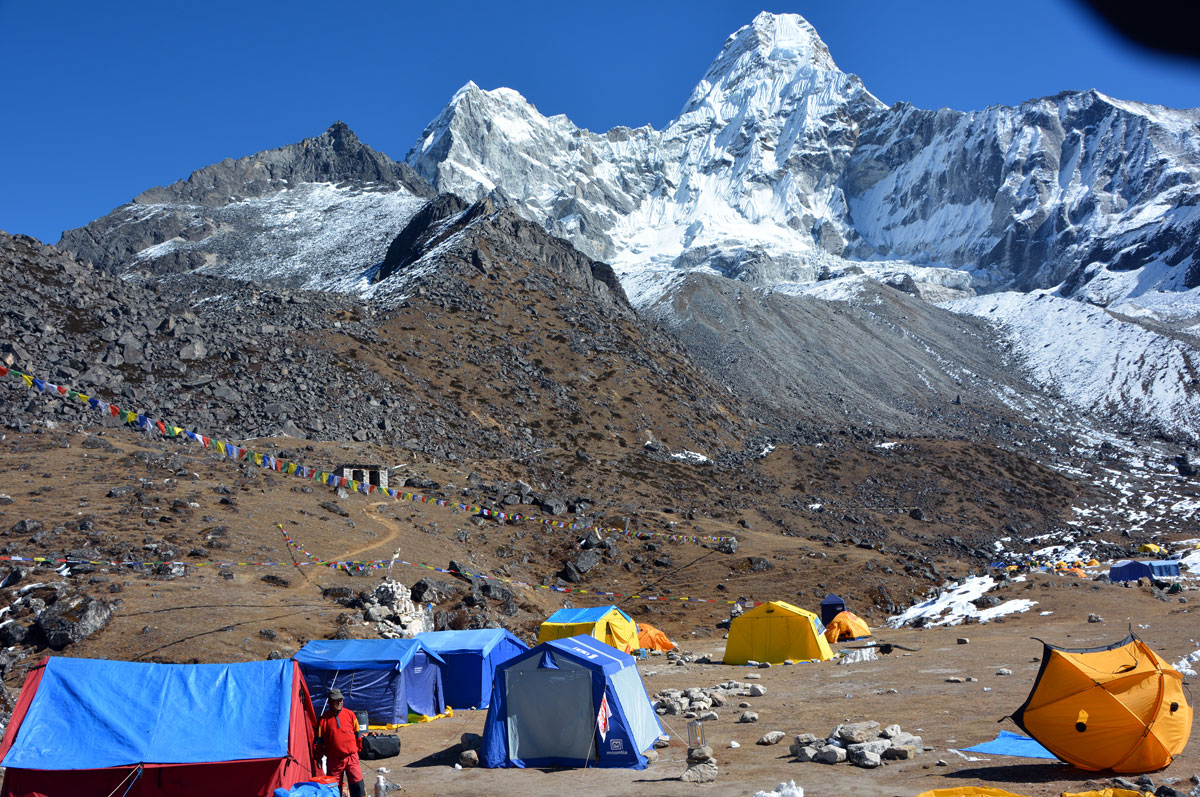
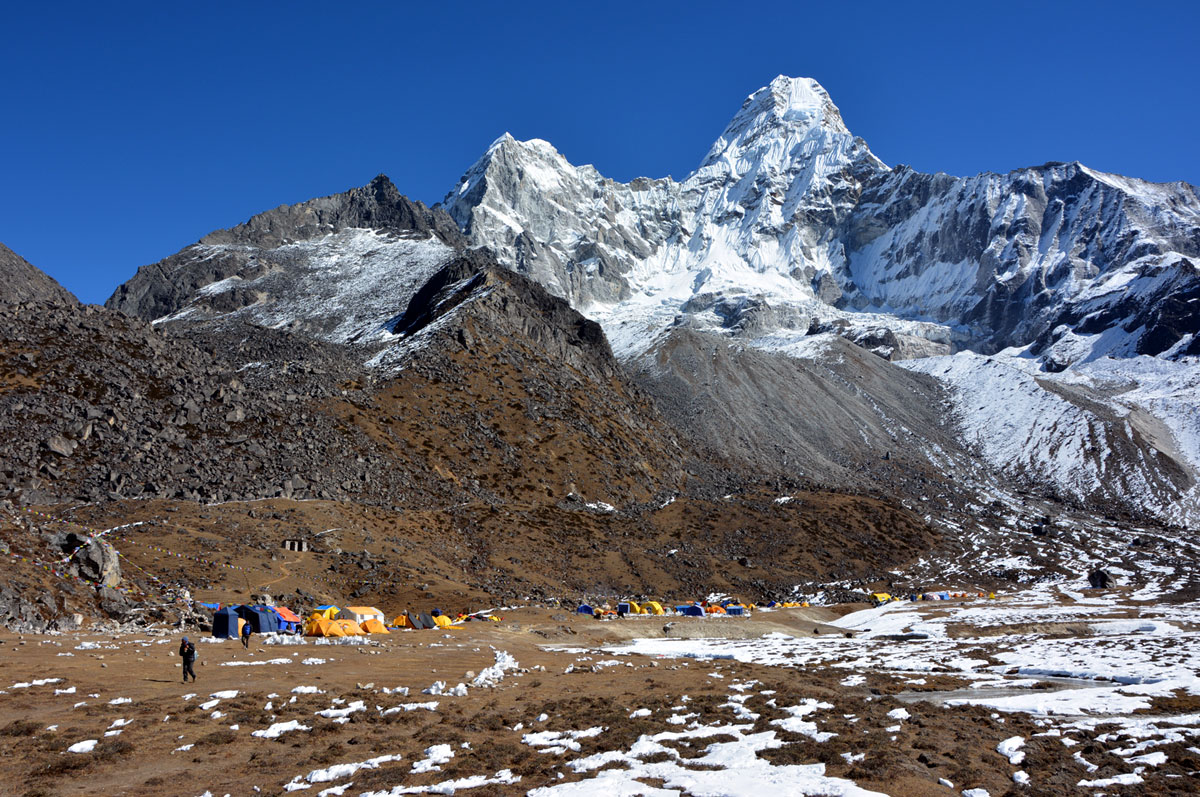
Ama Dablam Base Camp 4,600m: The fully tented headquarters (with a kitchen tent, dining tent, store tent, sleeping tent (individual), toilet tents, shower tent, etc.) is the operational hub and true headquarters, where acclimatization, rotation planning, and summit push decisions are made.
Ama Dablam Camp 1 at 5,400m: Accessed via a steep moraine and initial rock sections. Ama Dablam camp 1 serves as the launching point for the technical crux to camp II. The site offers a view of the route to Camp II and the summit, helping you mentally prepare.
Ama Dablam Camp 2 at 5,800m: Situated on a small ledge just below the hanging glacier. Access to Camp II is technically demanding and involves exposed climbing on a hanging rope to pass Yellow Tower. The Ama Dablam Camp II is the last camp from which the summit push starts. This camp offers one of the best views of the Himalayan Climb.
Summit Day (6,812m): The summit day involves navigating ice and rock sections, the steep ice of the Dablam glacier, exposed rock ridges, and the final snow slopes to the summit.
The journey to Ama Dablam combines with a beautiful trek through Sherpa villages and the most stunning mountain landscapes of the Khumbu region. The Ama Dablam expedition encapsulates the essence of mountaineering; it tests technical abilities, physical endurance, and decision-making skills while ascending and descending technical sections on rock, ice, mixed terrain, hanging terrain, and other terrain, offering all aspects of climbing in a severe mountain environment. For any mountaineer seeking a challenging, deeply satisfying climb, Ama Dablam stands as a premier objective in the Everest region.
For detailed itineraries, gear requirements, customized scheduling, or any other expedition inquiries, please get in touch with us at annatreks@gmail.com or via WhatsApp at +977 98510 30619. You can message us in Facebook.
Ultimate Himalayan Objective: Summit the iconic Ama Dablam (6,812m), one of the most beautiful and technically rewarding mountaineering peaks in the World.
Peak and Passes: Acclimatize and summit a premier “trekking peak,” Lobuche East (6,119m), while also reaching the legendary viewpoints of Kala Patthar (5,545m) and Everest Base Camp (5,350m).
Cultural and Spiritual Depth: Soak yourself in Sherpa culture, from the monasteries of Tengboche and Pangboche to participating in a traditional Puja ceremony to bless the expedition.
Iconic Panoramas: Witness breathtaking, close-range views of Everest, Lhotse, Nuptse, Pumori, and the entire Khumbu Himalaya from multiple unique vantage points, including from your summit camps.
Supported Expedition Experience: Undertake a major climb with the full support of experienced Sherpa guides, climbing Sherpas, and a dedicated base camp team, allowing you to focus on the ascent.
Arrive in Kathmandu (1,350m), traditional airport welcome, transfer to hotel, welcome dinner and trip briefing.
Free days for last-minute shopping and gear repacking, official permit formalities and cultural visit to the Boudhanath Stupa.
Stunning 35-minute mountain flight to Lukla (2,866m), trek to Phakding (2,652m), to Namche Bazaar (3,440m), first potential views of Mt. Everest from Topdanda, acclimatization in Namche Bazaar, visit local museums or take an optional hike to Thamo village, hike to Khumjung (3,790m), stop at the Everest View Hotel for panoramic tea with views of Everest and Ama Dablam, trek to Tengboche (3,867m), visit the famous Tengboche Monastery with incredible mountain vistas, trek Dingboche (4,410m), optional challenging hike to Chhukung Ri (5,540m) for breathtaking views, trek to Lobuche (4,887m), to Gorak Shep (5,164m) and Hike Kalo Patthar (5,545m), sunset or sunrise hike to Kalo Patthar for the closest, most iconic view of Mt. Everest.
Trek to Lobuje Base Camp (4,930m), acclimatization Climb on Lobuje Peak (6,119m), summit Lobuje East for phenomenal 360-degree views of the Himalayas. Return to Everest Base Camp.
Trek to Pangboche (3,985m), descend through beautiful valleys with constant mountain views, visit Pangboche Monastery for a Puja ceremony before trekking to Ama Dablam BC, trek to Ama Dablam Base Camp (4,600m), Ama Dablam Base Camp Rest, final preparation, and a Puja ceremony for a safe climb.
Ama Dablam (6,812m) Summit Push Climb, multi-day ascent via ABC, Camp 1, 2, and 3. Summit Day is a long, challenging push. Return to Base Camp, rest and repack at Base Camp.
Trek to Namche Bazaar, to Lukla, fly to Kathmandu, celebrate your achievement back in the comfort of the city, official Debriefing and receive certificates. Farewell, transfer to the airport for your international flight home.
The southwest ridge of Ama Dablam is considered the “standard” climbing route due to its relatively established routes and camps. The climbing duration is 5 to 7 days from base camp to the summit and back, and may vary depending on acclimatization, the climbing schedule, and climbing speed. The Ama Dablam southwest ridge route is the most popular choice for all climbers, and the key reasons are as follows.
The southwest ridge features fixed ropes and well-defined paths from previous ascents, guiding climbers through technical sections.
The Ama Dablam southwest ridge route remains challenging, with manageable rock and ice climbing.
Access to Ama Dablam Base Camp is via the main trekking route to Everest Base Camp, and it is easy for logistics, supplies, and support teams.
Mount Ama Dablam southwest ridge offers the most expansive and beautiful views of surrounding peaks, landscapes, and Sherpa villages throughout the ascent period, day and night.
This route involves steep ice walls, complex crevasses, and very little navigated information. It offers high-grade challenges, demands advanced technical skills, and is well prepared for extended exposure to high-altitude conditions. Compared to the Southwest Ridge Route, this route requires an additional 4 to 5 days for a round trip due to its complexity and the difficulty of navigating through crevasses and other obstacles. Climbers must spend 8 to 12 days on this route if they attempt it.
Less climbed than the Ama Dablam southwest ridge route. The Ama Dablam east ridge route offers technical challenges but can provide a unique perspective on Mount Ama Dablam’s features.
A rarely attempted route due to its difficulty and lack of established routes. It is suitable only for highly skilled climbers seeking an adventurous, record-breaking challenge.
All the above alternate routes offer different experiences but require greater expertise and preparation than the standard Southwest Ridge Route.
Please inquire at annatreks@gmail.com

I had always thought that trekking in Nepal required a looong time and that it had to be done in either spring or autumn. That was until a friend told me that it was also possible to do it in winter, and that you can reach places like the Everest...
Read More
[gallery columns="1" link="file" size="full" ids="5878"] [gallery size="full" columns="1" ids="5903"]
Read More
In August 2025, my wife and I decided to take the famous Everest Base Camp trek with Annapurna Treks, and we had a wonderful experience thanks to the company's excellent organization. We had never been to Nepal before, but we knew that during the monsoon season there was a high...
Read More